
12 Angry Men and the Art of Explaining Everything Away
Christian Apologetics, Atheist Doubt, and the Habit of Explaining Away the Evidence

Let me start with a confession.
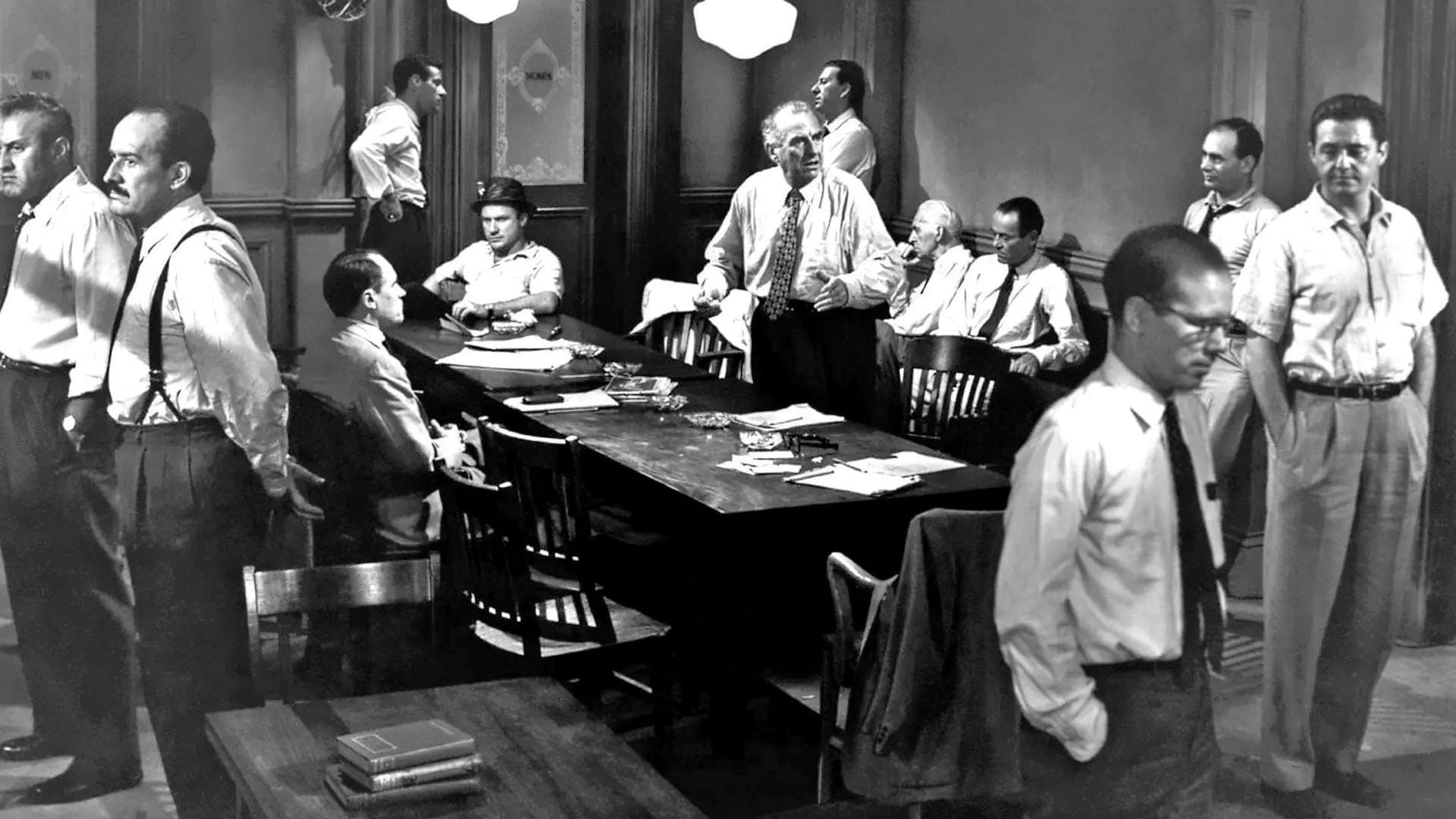
I am not the first person to make this analogy. A YouTuber I subscribe to—King Critical—once used 12 Angry Men as a framework for talking about belief and doubt. His take inspired me to go deeper, because the more I thought about it, the more I realized something unsettling:
I don’t think the kid in 12 Angry Men was innocent.
Now, before the film purists light their torches, let’s revisit what actually happens in 12 Angry Men.
The Setup: Reasonable Doubt on Trial
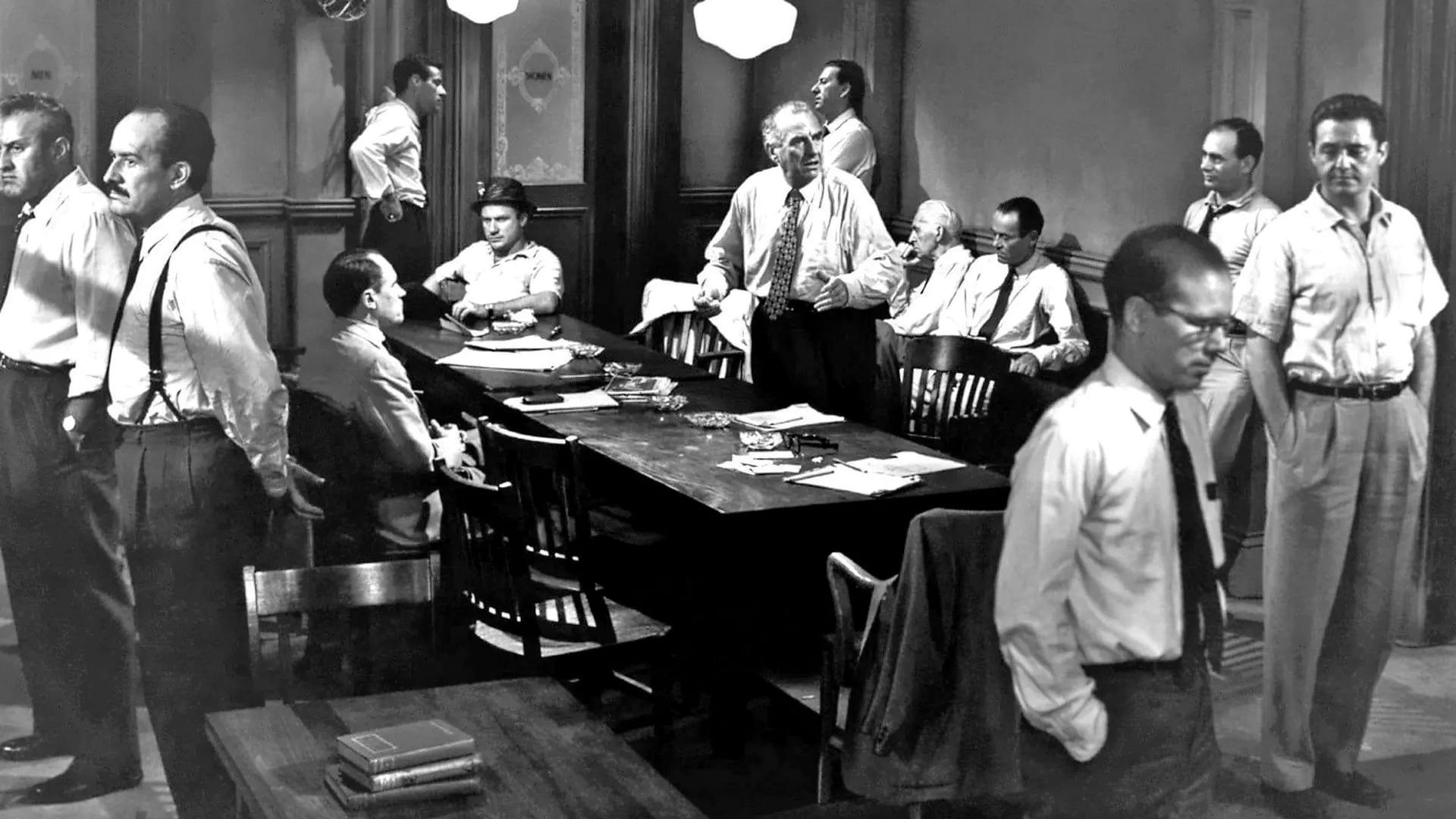
A teenage boy stands accused of murdering his father. The evidence is substantial:
- Multiple witnesses place him at the scene.
- He allegedly shouted, “I’m going to kill you.”
- His alibi is riddled with holes.
- A unique knife—like the one he supposedly bought—was found at the crime scene.
The jurors are prepared to convict quickly.
All except one.
Juror #8, played by Henry Fonda, votes “not guilty”—not because he’s convinced of the boy’s innocence, but because he thinks they owe him a discussion.
By the end of the film, all twelve jurors vote to acquit.
The stated reason? Reasonable doubt.
And that’s where the analogy begins.
The Accumulation of Doubt
Throughout the movie, Fonda dismantles the prosecution’s case piece by piece:
- The woman who claims she saw the murder was wearing glasses—but was she wearing them in bed?
- The old man who heard the boy flee had a limp—could he really have reached the door in time?
- The train passing by might have drowned out the alleged threat.
- “I’m going to kill you” could be an idle expression.
- The defendant couldn’t remember the movie he saw that night—but who remembers every detail under pressure?
- The knife wasn’t as unique as believed; Fonda buys an identical one.
Individually, each argument sounds plausible.
And that’s precisely the point.
None of these counterarguments proves the boy innocent. They merely introduce the possibility that he might not be guilty.
One doubt. Then another. Then another.
The strategy is cumulative—not in the sense of building a case for innocence, but in dissolving the certainty of guilt.
The Atheist Parallel
If you’ve ever engaged in serious debate with atheists, you may notice a similar pattern.
Let’s say the Christian presents:
- The cosmological argument: Why is there something rather than nothing?
- The fine-tuning of the universe.
- The historical case for the resurrection.
- The moral argument for objective moral law.
- The reliability of the New Testament documents.
The atheist response rarely attempts to construct a comprehensive alternative explanation for reality.
Instead, it often works like Juror #8’s method:
- Maybe the universe is eternal.
- Maybe there are infinite universes.
- Maybe moral realism doesn’t require God.
- Maybe the disciples hallucinated.
- Maybe the tomb story developed later.
- Maybe eyewitness testimony isn’t reliable.
- Maybe, maybe, maybe.
Each objection sounds reasonable in isolation.
But here’s the issue:
Explaining away one piece of evidence is not the same thing as explaining the totality of evidence.
And this is where the analogy sharpens.
The Knife Problem
The most telling scene in the film involves the knife.
The prosecution argues it is one of a kind. The defendant bought one just like it. An identical knife is found in the victim’s chest.
Juror #8 dramatically produces an identical knife purchased from another store.
Case shaken.
But pause for a moment.
Even if the knife isn’t unique, that doesn’t eliminate the overwhelming convergence of factors:
- Motive.
- Opportunity.
- Prior threats.
- Witness testimony.
- A missing alibi.
The existence of another knife does not magically create a new murderer.
It simply introduces a theoretical alternative.
And that’s precisely what often happens in atheistic apologetics.
The goal is not to demonstrate that naturalism best explains the data. The goal is to introduce just enough hypothetical alternatives to avoid commitment.
Reasonable Doubt vs. Radical Skepticism
In a court of law, the standard is “beyond a reasonable doubt,” not “beyond all conceivable doubt.”
If we demanded the absolute elimination of every hypothetical possibility, no one would ever be convicted of anything.
In philosophical debate, however, atheistic argumentation often shifts the burden:
If the Christian cannot eliminate every imaginable scenario—even wildly speculative ones—then belief is deemed irrational.
But think about the movie again.
Imagine if the jurors said:
- Maybe the old man lied for attention.
- Maybe the woman saw differently.
- Maybe the boy forgot.
- Maybe someone else found the knife.
- Maybe a stranger slipped into the apartment unseen.
All of that might be possible.
But how many maybes does it take before the alternative explanation becomes less plausible than the original?
At some point, the accumulation of hypotheticals becomes less reasonable than the straightforward reading of the evidence.
The Resurrection as the Jury Room
Consider the resurrection of Christ.
We have:
- Early eyewitness testimony.
- The empty tomb.
- The radical transformation of the disciples.
- The explosion of the early Church in hostile territory.
- The willingness of witnesses to suffer and die.
The skeptic replies:
- Maybe they hallucinated.
- Maybe the body was stolen.
- Maybe the tomb story developed later.
- Maybe Paul invented theology.
- Maybe grief caused visions.
Each “maybe” is like Juror #8 raising a hand and saying, “But is it impossible?”
No, it isn’t impossible.
But when stacked together, the alternative becomes a far more convoluted narrative than the resurrection itself.
The Difference Between Doubt and Explanation
Juror #8 never proves innocence.
He proves uncertainty.
That may be enough in a courtroom drama.
But when it comes to worldview, uncertainty is not a worldview.
If you dismantle every positive case for theism, what replaces it?
Naturalism must also explain:
- Why the universe exists.
- Why it is intelligible.
- Why morality feels binding.
- Why consciousness is irreducible.
- Why reason itself is trustworthy.
Atheistic apologetics often function as cross-examination without ever presenting a defense.
When “Maybe” Becomes a Strategy
The movie works dramatically because we sympathize with caution in a capital case. We want the jurors to think carefully.
But imagine if Juror #8 had said at the end:
“I still think he probably did it.”
That would change everything.
Because then the method would look less like justice and more like paralysis.
If the boy in 12 Angry Men actually committed the murder, then the film becomes a study in how easy it is to dissolve a strong case by introducing endless hypotheticals.
Which brings us back to modern debates.
It is possible to sound reasonable while explaining away one piece of evidence.
It is not reasonable to explain away everything.
The Real Question
The question is not:
“Can I invent a possible alternative?”
The question is:
“What best explains the totality of the evidence?”
That is the difference between genuine inquiry and systematic doubt.
In the jury room, doubt wins the day.
In worldview debates, however, doubt alone cannot carry the weight of reality.
At some point, we must ask not whether belief is absolutely airtight, but whether the alternative is more plausible—or merely a collection of maybes strung together long enough to avoid a verdict.
And that is why 12 Angry Men is such a powerful analogy.
It shows us how easy it is to dismantle a case without ever building one.
The only question left is whether that’s wisdom—or just a refusal to decide.