Defensor Harmoniae Biblicae: A Lutheran Pastor Made a Hip-Hop Project.
Here's Why That's Not As Stupid As It Sounds.

I can already hear it. A confessional Lutheran pastor from the Florida Panhandle making hip-hop? The same guy who writes about pulp fiction, preaches from the Book of Concord, and plays rockabilly on weekends? What kind of theological identity crisis is this?
Fair. Let me try to explain.
The Origin Story Nobody Asked For
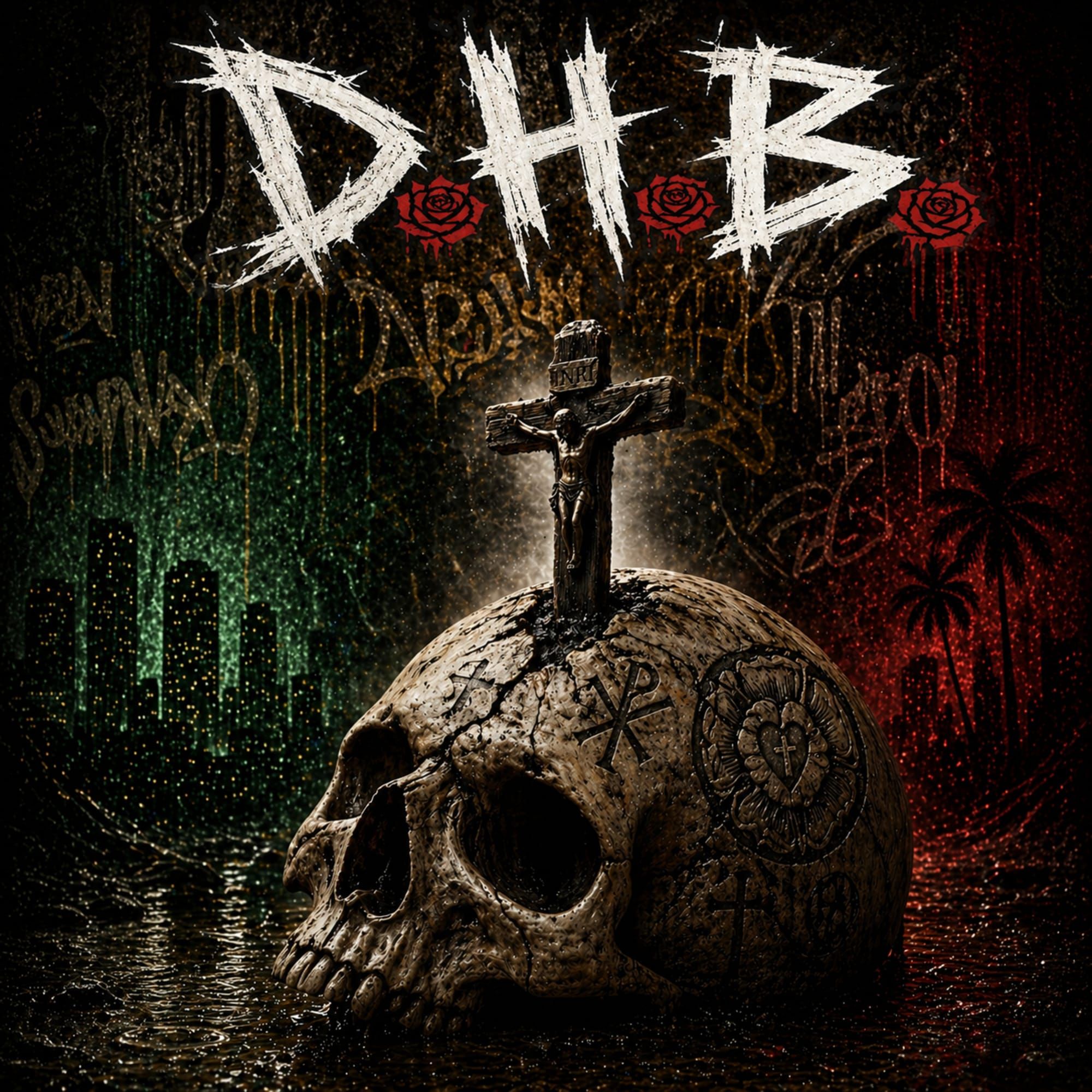
DHB—Defensor Harmoniae Biblicae—didn’t start in a studio or a marketing meeting. It started in notebooks. Late nights. Hard questions that kept nagging at me and wouldn’t fit anywhere I tried to put them.
I’ve been writing lyrics my whole adult life. Folk songs, rockabilly tunes, the occasional hymn text when the mood strikes and the words land right. But certain things I wanted to say kept bumping up against the ceiling of those forms. I wanted theological precision. Narrative density. The ability to actually develop an argument instead of just gesturing at it and hoping the chord change does the heavy lifting.
Hip-hop, done right, is poetry that works. It’s the one genre in popular music where you can fit enough words per minute to actually explain something—not just point at it with a hook and a key change, but turn it over, look at the underside, show your work. When you have something substantial to say—not “Jesus loves you, have a nice day,” but something that actually costs something to say—hip-hop gives you the room to say it. (This is one reason among many why I despise Contemporary Christian Music or CCM as it is called. No substance or theological depth. But that’s another article altogether and I have addressed CCM in many of my videos on YouTube, if you’re curious)
That realization became DHB.
What It Actually Is
Lyrically, DHB lives in the places most Christian artists romanticize or avoid—faith, failure, hypocrisy, family, doctrine, loss, corruption, and the grinding tension of trying to stand firm when compromise is the path of least resistance. Some songs pull from history. Some are personal to the point of being uncomfortable to release. Some come out swinging. Others feel like praying at two in the morning when you’re not sure anyone’s listening.
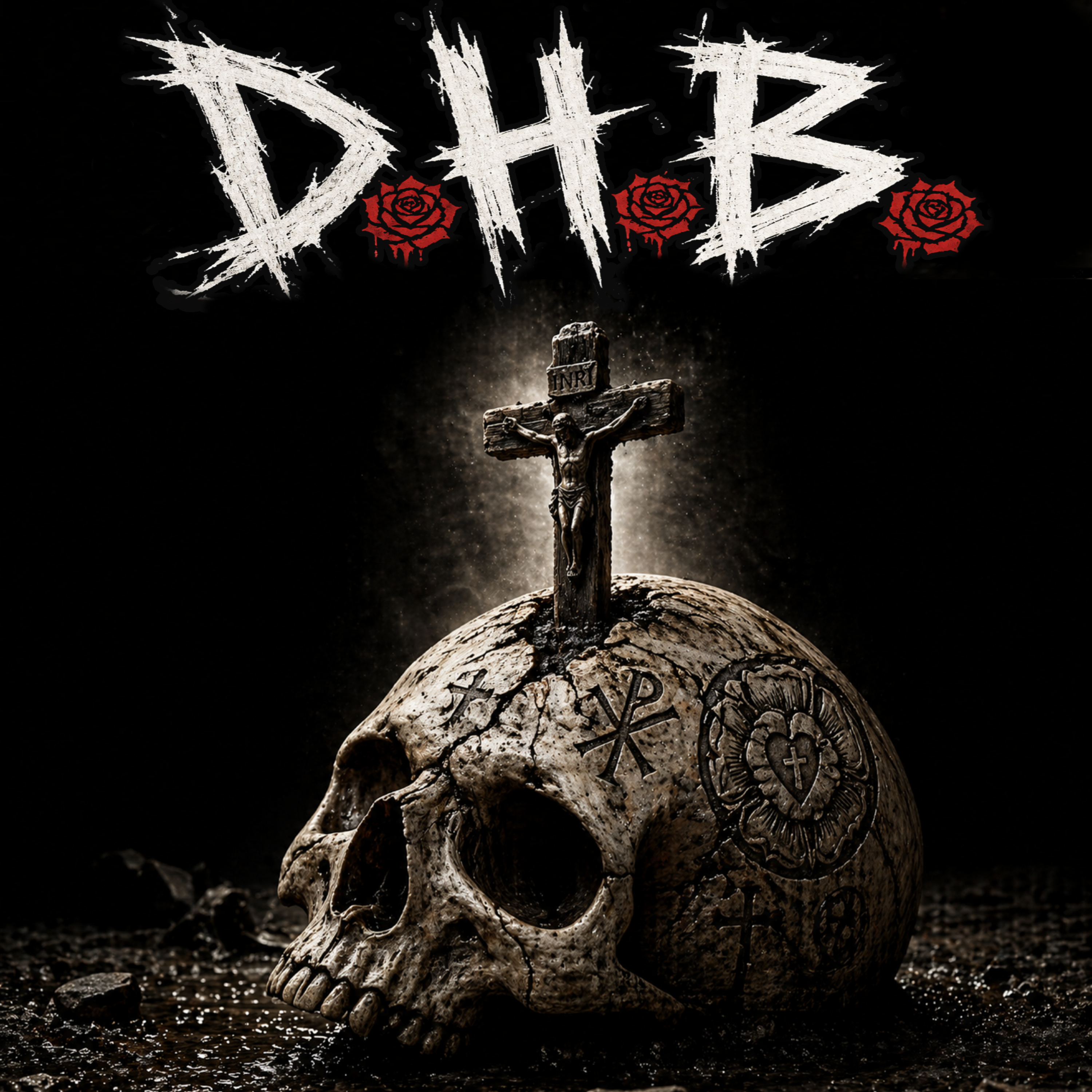
The name—Defensor Harmoniae Biblicae, Defender of Biblical Harmony—is a nod to the Formula of Concord and the Lutheran commitment to Scripture interpreting Scripture. The conviction that God’s Word speaks with one voice, even when human interpreters spend centuries trying to make it say contradictory things depending on who’s paying them.
DHB isn’t built around image or chasing whatever sound is hot. It’s built around truth. Spoken plainly, sometimes painfully, but honestly.
I’m not trying to be the next big thing in Christian hip-hop. I’m not even sure I fit in that category. Most of it follows a predictable arc: catalog of past sins, moment of conversion, gratitude for grace, vague encouragement. There’s nothing wrong with that arc—it’s the basic shape of the Christian life, and it’s been that way since Augustine. But it’s also been done to the point where it doesn’t startle anyone anymore, and it tends to trade theological depth for emotional warmth. Which is a bad trade.
DHB goes somewhere different. What does it mean to confess historic Christianity when doctrine is a dirty word? How do you raise kids in a culture that’s actively trying to devour them? What happens when the institutional church fails—not abstractly, but in ways that leave real damage on real people? How do you hold onto hope when everything is sliding?
I don’t have neat answers to those questions. Hip-hop gives me the space to be honest about that instead of resolving everything into a tidy three-minute pop song with an uplifting bridge I don’t quite believe.
The AI Elephant in the Room
Here’s the thing I’ve wrestled with. The thing that’s going to make some of you uncomfortable. The thing I’ve decided to just say plainly because hedging it would be worse.
I used AI tools to help shape the sound of DHB.

Here’s why, and why I think it’s defensible.
I have never liked my own voice. That’s not imposter syndrome (though that may be a minor factor)—it’s an honest aesthetic judgment I’ve arrived at after decades of listening back to recordings and wincing. My voice works fine for folk and rockabilly. For hip-hop, for the kind of precise rhythmic delivery the genre actually demands? It doesn’t fit. And I’ve known that for a long time.
I’ve tried to work around it. Multiple times over the years I’ve attempted to hire vocalists to bring these lyrics to life. It’s been a disaster every single time. Miscommunication about vision. Performers who wanted to rewrite the words to fit their style. People who took the money and stopped returning calls. Collaborators who didn’t understand—or didn’t care about—the theological specificity of what I was trying to say, and who treated the lyrics like raw material instead of the finished thing.
After enough of that, I had to ask myself a harder question: what if the real barrier wasn’t my voice, but my insistence that the delivery had to happen one specific way?
That’s when AI entered the picture. Not as a ghost-writer. Not as a co-author. As a tool—the same category as a synthesizer, a drum machine, or any other technology that extends what one person can produce alone.
A Theological Framework, Because I Can’t Help Myself
Let me be precise about something: AI cannot tell the truth. It can process patterns, generate plausible outputs, mimic human expression with increasing sophistication. But it doesn’t believe anything. It doesn’t know anything. It’s a very sophisticated mirror that reflects what’s in its training data back at you in shapes you find useful.
This is actually the key to understanding how Christians can use AI tools without losing their minds about it.
The truth in DHB doesn’t come from the AI. It comes from Scripture. From the Lutheran Confessions. From years of pastoral work—walking with people through their worst moments and watching grace show up in places where the Old Adam thought it had no business being. The AI didn’t write these lyrics. I wrote them—every word, every theological claim, every line I’m going to have to stand behind. The AI helped translate them into a sonic form I couldn’t produce on my own.
When Gutenberg invented the printing press, he didn’t write the Bible from scratch. He built a tool that made the Bible more accessible. The truth of Scripture didn’t depend on his personal holiness or the mechanical reliability of movable type. The press was a means of transmission, not a source of meaning.
AI, used rightly, is the same category of thing. The inspiration, the conviction, the faith, the life experience, the actual wrestling with God—those have to come from somewhere real. From a human being who has actually suffered. Who has actually experienced grace. Who has something at stake in what they’re saying.
AI can help you produce a sound. It cannot give you something worth saying.
Vocation, Genre, and Why This Matters More Than You’d Think
This connects to something that’s been working in the back of my head for years: Luther’s doctrine of vocation and how it applies to musical genres.
Luther’s great insight—the one that often gets flattened into bumper-sticker theology—was that every legitimate calling is a Larve Dei, a mask of God. A way that the Creator works through creatures to care for creation. The farmer growing wheat, the mother nursing her child, the magistrate enforcing law—none of these callings is “more Christian” than the others. They serve different functions in the economy of God’s providence. The question isn’t which calling is holiest but whether you’re doing yours faithfully.
Genres have vocations too. That’s the less-obvious application.
The Divine Service—the gathered assembly around Word and Sacrament—has a specific vocation: to deliver Christ’s gifts to His people. The music that serves that vocation has a specific character. It needs to be congregational, which means singable by ordinary people without musical training. Textually driven, because the words are carrying freight that the aesthetic experience can’t carry alone. Reverent in a way that doesn’t call attention to itself.
This is why we don’t have Heavy Metal Divine Services. Not because metal is sinful or Christians shouldn’t engage with it. Because it has a different vocation—channeling raw emotional intensity, catharsis, aggression. Those are legitimate human experiences. They deserve artistic expression. But they’re not what you need when you’re receiving the body and blood of Christ. The vocation doesn’t fit the context.
Hip-hop exists to tell stories, make arguments, process complex experience through rhythm and wordplay. It’s rhetorical in a way that congregational hymnody isn’t—and shouldn’t be. It demands a kind of attention that works in headphones, in the car, in the space between where you are and where you’re going. It doesn’t work when you’re trying to sing with the eighty-year-old woman in the third pew who’s been coming here for sixty years and deserves music she can actually sing.
So DHB doesn’t pretend to be worship music. It’s not trying to belong in the Divine Service. Its vocation is witness in the world—proclamation in the marketplace, truth in the earbuds of someone who would never walk through a church door, a signal to the believer in the cheap seats that confessional Christianity isn’t as dead as everyone keeps insisting.
The Church needs liturgy. The world needs witness. DHB is trying to be the second thing.
Why Hip-Hop and Not Something Else
The honest answer is that hip-hop chose the content, not the other way around.
The Lutheran Confessions aren’t known for brevity. The Formula of Concord doesn’t fit on a bumper sticker, even if you tried. If you want to communicate confessional theology in a wider, mainstream musical form with anything approaching precision, you need a genre that doesn’t punish you for using more than thirty words per verse.
Hip-hop also carries a prophetic tradition in its bones. From the Bronx to ATL, it’s been the vehicle for voices that weren’t supposed to be heard—naming injustice, demanding accountability, saying true things about power to the people power was being exercised against. That’s not so different from what the biblical prophets were doing. Or Luther, nailing things to doors.
I’m not claiming to be prophetic in any capital-P sense. I’m a pastor from the Panhandle with notebooks full of lyrics, not Isaiah. But I’m trying to say true things about the Church and the world in a form that can reach people. Hip-hop provides that form in a way nothing else I’ve tried does.
The Uncomfortable Part
Here’s where I have to be honest in a way that costs something.
Making DHB has forced me to sit with my own insecurities in ways I didn’t see coming. Not just about my voice, but about whether any of this matters, whether I’m qualified, whether I’m just another pastor with a creative hobby who should stick to sermon prep and leave the art to people who are actually artists.
Every track I’ve finished gets followed by the same internal noise: Who do you think you are? This is ridiculous. A thirty-something pastor making hip-hop? Your congregation is going to think you’ve lost it. The hip-hop community is going to look right through you. You’re too old, too white, too Lutheran, too something for this to land.
I don’t have a clean answer to that. I just remember why I started.
I started because I had something to say that wouldn’t fit anywhere else. Because the Christian should have art that doesn’t apologize for having convictions. Because somewhere out there, someone needs to hear that holding to the ancient faith is possible in the arts—that doctrine and creativity aren’t enemies. That you can care about what’s actually true and make something worth listening to.
If DHB finds that person—even one—then the doubt was worth it. The awkward explanations were worth it. The raised eyebrows from people who have already decided what this is before hearing a single second of it were worth it.
What’s Coming
The first DHB tracks are rolling out in the next two weeks. Some are theological in the traditional sense—justification, the means of grace, the problem of evil approached from directions you might not expect. Others are narrative—historical stories, personal confessions, fictional scenarios that illuminate something real.
It won’t be polished to major-label standards. It’s a pastor with notebooks full of lyrics and the tools available to him. That’s the whole operation.
But sometimes that’s enough. Sometimes the value of art isn’t its technical perfection. Sometimes it’s just the willingness to say something true when everybody else is busy saying nothing at all.
The Bottom Line
Defensor Harmoniae Biblicae. Defender of Biblical Harmony. That’s the thread.
DHB exists because I believe the culture needs voices that aren’t afraid to be specific—to name names, draw lines, say “this is true and that is false” in a culture that treats that kind of clarity as the highest form of bigotry.
It exists because hip-hop is capacious enough to carry Lutheran theology without flattening it.
It exists because I’ve spent decades writing lyrics that deserved a home, and I finally built one.
And it exists because I can’t not make it. The songs are there. The words are burning a hole in the notebook. The only question was whether I’d have the nerve to release them.
Turns out, I do.
Here is the first Single (Spotify, YouTube, Apple Music) Written from the perspective of my absolute favorite American Lutheran theologian.
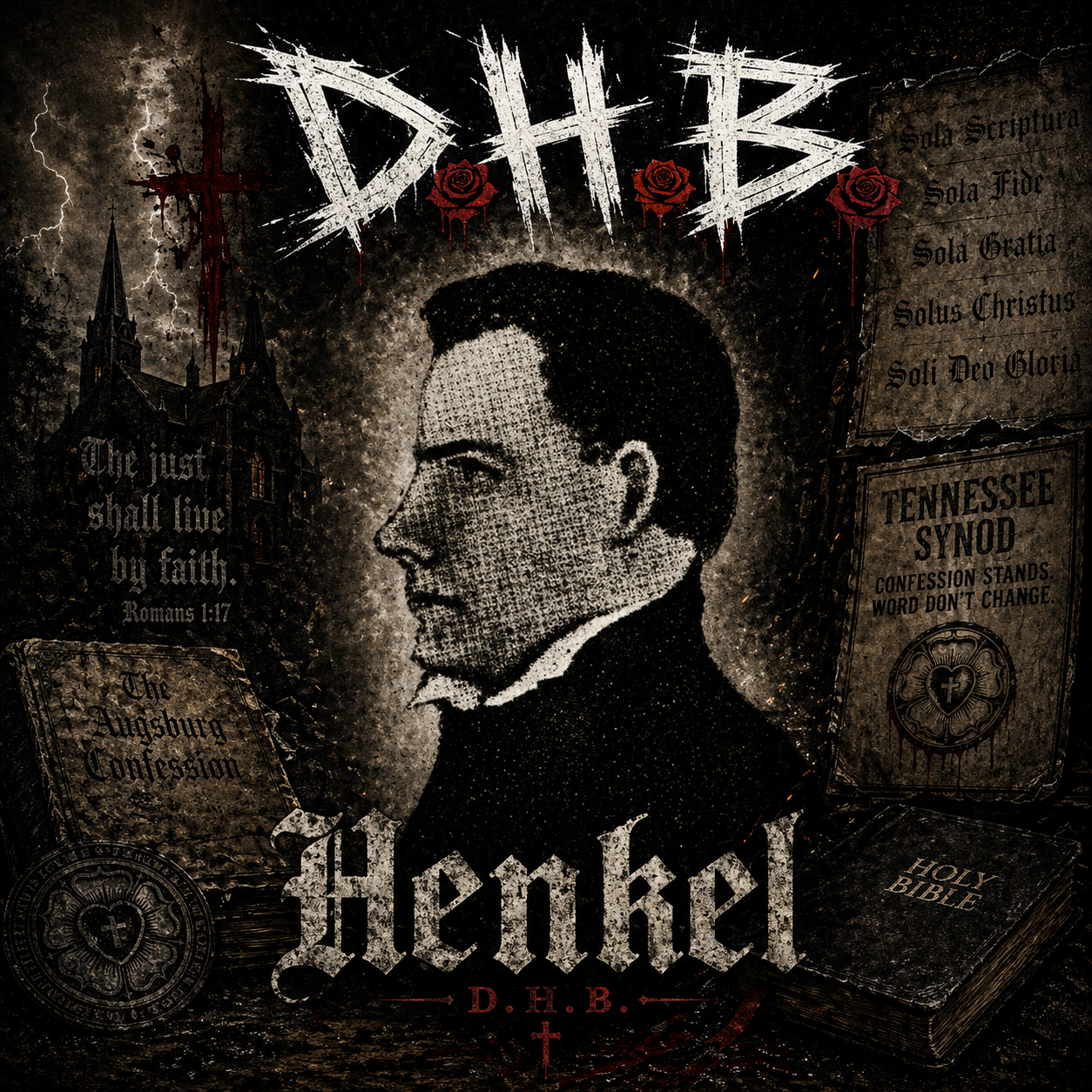
The full debut album will release on May 26th. Pre-save it on Spotify here.