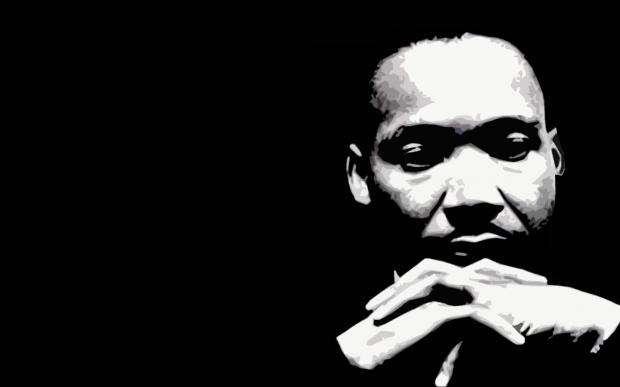
Martin Luther King Jr., Christian Martyr?
A Confessional Lutheran Correction

Every January, American civil religion dusts off its liturgy. There are the familiar hymns—“I Have a Dream,” “Letter from Birmingham Jail,” the sanctified sound of King’s voice echoing through school assemblies and political speeches. And there is an unspoken creed: Martin Luther King Jr. was a Christian hero—perhaps even a Christian martyr.
From a Confessional Lutheran perspective, that claim does not hold.
This is not an argument about civil rights, nor an attempt to deny that God can restrain evil and advance outward justice through civil order. The issue here is ecclesial and theological: Was MLK a Christian teacher in confession and doctrine? And does his death qualify as Christian martyrdom?
Measured by Scripture’s doctrine of Christ and the Church’s historic understanding of martyrdom, the answer is no.
1) Christianity is not defined by “good causes,” but by confession of Christ
The Lutheran Confessions refuse sentimentality: the Church stands on the article of justification and the saving work of Christ as historically accomplished and preached as divine truth (AC IV; AC III).
That matters here because King’s own published theological statements repeatedly “de-literalize” core creedal claims (virgin birth, bodily resurrection) in a way that departs from the Apostles’ Creed and the New Testament.
2) King’s own words: stripping the Creed of “literal interpretation”
In a 1949 theological essay (Crozer Seminary), King explicitly commends “stripping” central doctrines of “literal interpretation,” even while trying to preserve what he calls their “deeper meaning.” He writes:
“strip them of their literal interpretation … [though] … historically and philosophically untenable.”
That is not a small move. It is the classic maneuver of Protestant liberalism: keep the moral “spirit,” discard the historical “event.”
3) King on the virgin birth: the evidence is “too shallow”
In the same essay, King addresses the virgin birth and says:
“the evidence … is too shallow to convince any objective thinker.”
He then argues that early Christians explained Jesus’ “spiritual uniqueness” in terms of “biological uniqueness,” and that modern people should not do so in “unscientific terms.”
From a Confessional Lutheran standpoint, this is not an allowable “difference of emphasis.” The virgin birth is not a poetic flourish; it is part of the Church’s received confession of Christ.
4) King on the resurrection: “external evidence … found wanting,” and “whatever form … isn’t important”
Still in that 1949 essay, King treats the resurrection as an outward expression of an inner faith-experience and says:
“the external evidence … is found wanting.”
“this inner faith took outward form.”
Then, in an Easter sermon at Dexter Avenue Baptist Church (“A Walk Through the Holy Land”), King tells his congregation:
“Whatever you believe about the Resurrection … isn’t important.”
He goes on to describe physical resurrection as something “some people felt,” and frames Paul’s teaching as a synthesis between Greek immortality-of-the-soul and Hebrew resurrection.
A Lutheran critique here is straightforward: St. Paul does not treat the resurrection as an optional “form.” He stakes the entire Christian faith on it (1 Cor. 15). If the bodily resurrection is “form” rather than fact, Christianity collapses into moralism.
5) Martyrdom is death for Christ’s confession, not death while doing civil work
The Church has never defined martyrdom as “dying while fighting for a cause,” even a righteous one. Martyrdom is bearing witness to Christ’s saving Gospel and being killed for that confession.
King was assassinated while engaged in public activism. But the historical circumstances of his death are not the same as being killed for confessing Christ crucified for sinners, administering Word and Sacrament, and refusing to deny the faith.
So to call him a “Christian martyr” is to redefine martyrdom into something more like national canonization.
6) Scandal and disqualification from office: what we can responsibly say
Scripture’s pastoral qualifications (1 Tim. 3; Titus 1) are not vague aspirations; they are protective boundaries for Christ’s flock.
On the moral scandal question, a careful Lutheran approach must distinguish two things:
- what is firmly established vs.
- what is alleged and bound up with hostile surveillance.
What is solidly documentable from major reporting on the archival record is that serious allegations of sexual misconduct have long been part of the historical discussion, and modern debates intensified after releases from FBI material and David Garrow’s widely discussed claims.
A Lutheran point still stands regardless: public ministry is accountable to public doctrine and life. Even where the Church extends personal charity about the soul, the Church cannot pretend that King’s notorious, unresolved scandal is irrelevant to the office.
7) Academic dishonesty: Boston University’s plagiarism finding
Here we are on firmer ground.
Boston University convened a panel that concluded King plagiarized in his doctoral dissertation, though the university did not revoke the degree. The Washington Post quotes the panel’s conclusion in blunt terms:
“There is no question but that Dr. King plagiarized…”
Other contemporary reporting likewise describes the panel’s conclusion and BU’s decision not to revoke.
This matters in a theological argument because the pastoral office is a teaching office. A pattern of scholarly misrepresentation is not a charming human flaw; it is a breach of integrity in handling truth.
A contrast many forget: J. H. Jackson
If you want a more revealing comparison from the same Baptist world, look at Joseph H. Jackson, longtime president of the National Baptist Convention, who often clashed with King.
Jackson’s politics and strategy were controversial (and I am not commending every prudential judgment he made). But the comparison is illuminating in a Lutheran way: Jackson repeatedly tried to keep “church” from collapsing into “movement.”
For readers who want primary-source flavor, a curated excerpted selection of Jackson’s convention addresses (drawn from his book Unholy Shadows and Freedom’s Holy Light) is available through TeachingAmericanHistory.
And the King Institute’s own encyclopedia entry frames Jackson precisely as a denominational leader who resisted King’s use of civil disobedience as the movement intensified.
My Lutheran point is not “Jackson was correct about every tactic.” It’s this: Jackson’s posture more closely resembles the Church’s proper limits—the Church preaches Christ; the state bears the sword; Christians live vocations in the world; and none of that should be confused into a single messianic program.
Why this matters for Christians today
If you can deny the virgin birth and treat the resurrection as negotiable “form,” and still be hailed as a “Christian martyr,” then “Christian” has been reduced to a vague label for admirable activism.
The Church does not need civic saints. She needs faithful confessors of Christ—true God and true Man—crucified for sinners, risen bodily, preached as forgiveness, and delivered in Word and Sacrament.
Martin Luther King Jr. was a towering figure in American history. But by his own published theological method—stripping the Creed of literal content where it collides with modern skepticism—he cannot be held up as a Christian nor a martyr in any historic, confessional sense.
Sources (selected)
Primary / archival (MLK)
- Stanford King Institute: “What Experiences of Christians Living in the Early Christian Century Led to the Christian Doctrines…” (Crozer Seminary essay, 1949).
- Stanford King Institute: “A Walk Through the Holy Land, Easter Sunday Sermon…” (Dexter Avenue Baptist Church).
Plagiarism finding
- Washington Post (Oct. 11, 1991): BU panel finding and quotation.
- Los Angeles Times (Oct. 11, 1991): summary of BU panel decision.
- Washington Post archival piece (Oct. 11, 1991): additional details of panel determination.
Sexual misconduct allegations / historiography context
- The Guardian (June 8, 2019) on Garrow and FBI document releases.
- Washington Post (May 30, 2019) on Garrow and scholarly dispute.
- Garrow essay PDF (2019) as the contested secondary source being discussed.
- Atlanta Journal-Constitution (May 30, 2019) noting the long-known nature of affairs and Hoover-era motives.
J. H. Jackson
Stanford King Institute encyclopedia entry: “Jackson, Joseph Harrison.”
TeachingAmericanHistory excerpted addresses (source noted as Jackson, Unholy Shadows and Freedom’s Holy Light).