
Music You Can Hold: Collecting, Streaming, and the Christian Stewardship of Sound
A follow-up to "You Shall Not Steal" — and the announcement I've been waiting to make.

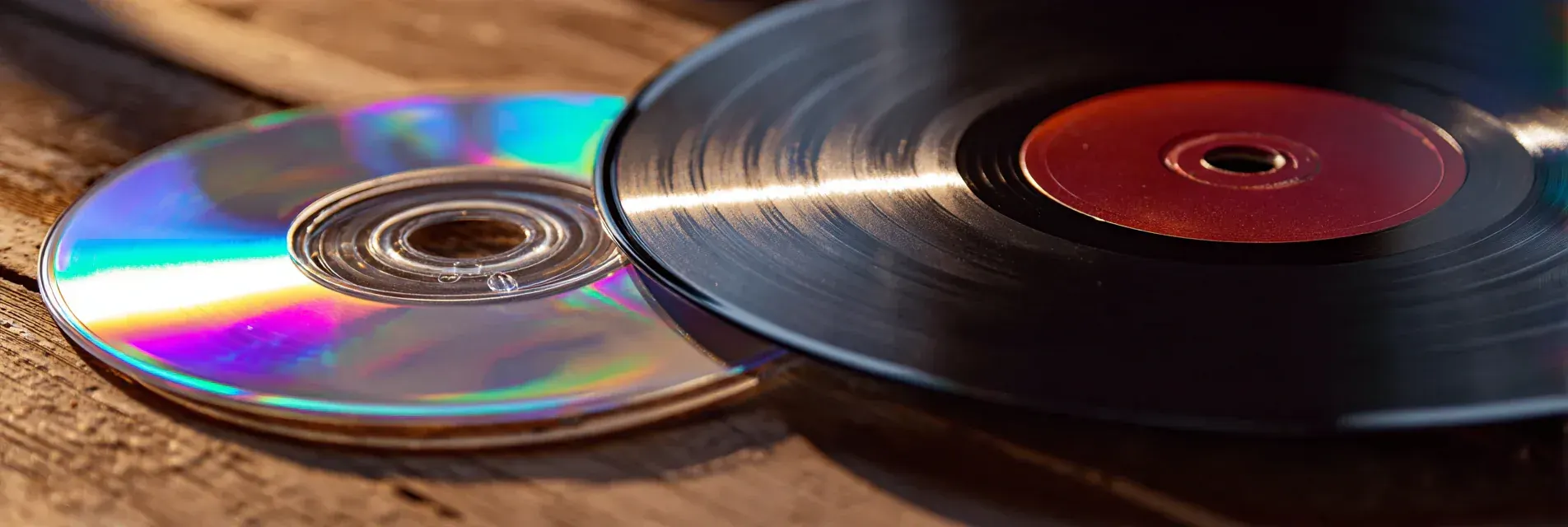
A little while ago I wrote about setting up my Jellyfin media server: backing up every DVD, Blu-ray, and CD I own, refusing to pay a monthly fee for permission to watch things that already sit on my shelf. That article (”You Shall Not Steal”) looked at physical media from the receiving end — as a consumer and steward of what I’ve been given.
This one comes from the other side of the shelf. Because I am not only a collector of music. I make it.
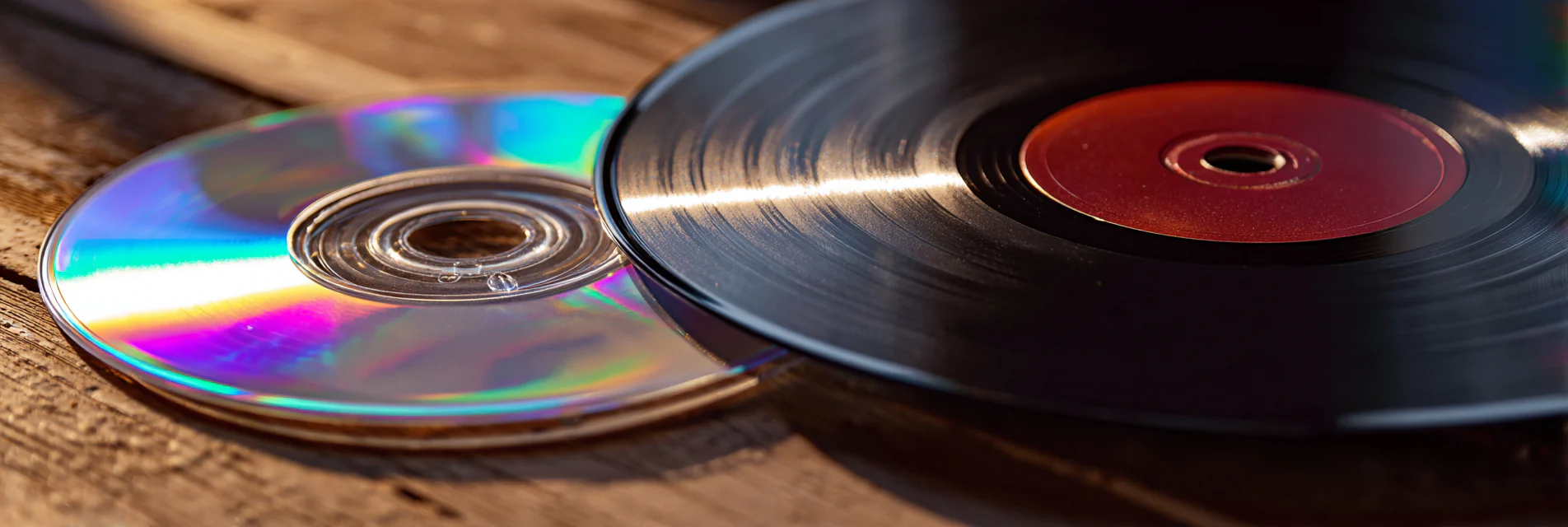
Under the name DHB, I write and produce hip hop from a Confessional Lutheran conviction — old-school in sensibility, unapologetic in doctrine, run out of my own DHB catalog. And after years of loops, late nights, and more mixing passes than I’d like to admit, my debut album is finally getting the treatment I’ve always argued it deserved: a real, physical release, on vinyl and CD.
More on that below. But first I want to answer a fair question — one I’d ask myself if I read my last article and then saw my music on Spotify. If owning is faithful stewardship and renting is the trap, then why is a man who backs up his own DVDs streaming his own record to strangers on the internet?
The answer is the whole point of this piece.
The Collector and the Streamer Are Not at War
Here is the tension, stated plainly: I believe Christians should own their media, and I also use streaming platforms to share my music with the world. Those two things sound like they should cancel each other out. They don’t.
As Confessional Lutherans, we have a category for this that the surrounding culture has largely lost: the two governances, or two kingdoms. God rules His world with two hands. With His right hand He governs the Church through Word and Sacrament, delivering Christ to sinners. With His left hand He governs the temporal, civil, ordinary business of daily life — bakers and farmers and magistrates and, yes, musicians and the tools they use.
Streaming is a left-hand-kingdom tool. So is a vinyl press. So is a hard drive. None of them is holy in itself, and none of them is sinful in itself. They belong to the vast middle territory the Confessions call adiaphora — things neither commanded nor forbidden by God, left to Christian freedom and wisdom.
A great deal of anxious Christian hand-wringing about technology comes from treating adiaphora as though it were law — as though the medium were the moral question. It isn’t. The moral question is always about the heart, the neighbor, and faithful use. Streaming is not a sin. Rented-only access marketed as ownership is a problem — but the platform itself is a piece of wire and code that God can bend to good purpose.
So I hold both without contradiction:
- Streaming is how I share the music — how a stranger in another country hears a Lutheran rapper for the first time.
- Physical media is how the music can actually be owned — held, kept, handed down, played when the servers are long gone.
One is the open door. The other is the thing you carry home through it.
Music Is a Gift, and Gifts Are Meant to Be Stewarded
Luther had almost no patience for people who despised music. In his 1538 preface to Georg Rhau’s Symphoniae iucundae, he called it a gift of God, not of men, and put it in astonishing company:
“Next to the Word of God, music deserves the highest praise.”
Read that again. Not entertainment. Not decoration. Not a youth-group gimmick to warm people up before the real content. A gift ranked immediately after the Gospel itself — a costly treasure, in Luther’s words, given to mankind by God.
I’ve written at length elsewhere on the twofold vocation of music: sacred music serving the Divine Service, carrying the Word into the ear and the heart, and secular music serving the left-hand kingdom as a genuine and honorable good, if done well. Both are real callings. Both are places where God works.
And that word — vocation — is where stewardship comes in. Luther taught that God provides His good gifts through masks, larvae Dei: He feeds you through the farmer, clothes you through the weaver, and delights you through the musician. When I sit down to write a song, I am not escaping my faith or setting it aside for a hobby. I am standing in a station God has given, a small mask through which He hands out a good and lawful pleasure to my neighbor.
A gift like that deserves to be stewarded, not just streamed and forgotten. It deserves to be made well, mastered carefully, and then given a form that can last — something a person can own outright, not merely borrow at the platform’s pleasure. If I argued in my last article that Christians should be able to truly own their music, then the least I can do as an artist is give my listeners something to actually own.
Streaming Is a Storefront Window, Not a Home
I’m grateful for streaming. I use it deliberately. But I refuse to let it be the final resting place of my art, and Christians of any craft should think hard before they let it be the resting place of theirs.
A streaming catalog is a rented shelf in someone else’s warehouse. The terms can change overnight. A track can be pulled, a service can fold, a catalog can be reorganized without you. I’ll say gently, from firsthand experience, that a platform can even slap a label on your work that you never chose and did not earn — and getting it corrected is entirely at their mercy. That is not ownership. That is a window display you don’t control.
So I’ve come to think of it the way a shopkeeper thinks of the front glass:
Streaming is the window that invites people in. Physical media is the thing they carry home and keep.
The window is wonderful for what it’s for. It lets a curious stranger hear the whole record for free, decide whether it’s for them, and share it with a friend. That’s evangelism for a catalog — the open, generous, low-friction invitation. But no one confuses the window display with the possession. You don’t own the mannequin. You own what you bought and brought home.
For DHB, streaming is the invitation. Vinyl and CD are the possession. And I wanted my listeners to have the option of the second, not just the first.
Putting It on Wax: DHB’s Debut Album, Now on Vinyl and CD
So here is the announcement.
DHB’s debut album is now available on vinyl and CD — real records you can hold, spin, shelve, and own outright. Available for order here: https://elasticstage.com/dhbhiphop
I’ve released it through elasticStage, and the model is worth explaining because it fits this whole argument almost too neatly. elasticStage is an on-demand vinyl and CD platform: instead of pressing a warehouse full of records up front, each vinyl or CD is manufactured only when someone orders it. They handle the pressing, the shipping, and the fulfillment to more than 90 countries, and they make a proper 12” record and standard CD out of it. As the artist, I keep the rights to my own recording.
The phrase they use for it is “streaming, but physical” — and honestly, that’s the point of this entire post in a sentence. A made-to-order catalog never sells out and never goes out of print, which means the disappearing-media problem I complained about last time simply doesn’t apply. The record can’t be quietly deleted from your library, because it isn’t in a library. It’s in your hands. On your shelf. Yours.
A few notes for anyone new to the DHB project:
- If you’ve never heard it, this is hip hop written from real Lutheran doctrine — Law and Gospel, the two kingdoms, the Sacraments — not vague spirituality with a cross sticker on it.
- Tracks like Steadfast and Medicine of Immortality carry the theological weight; others just knock.
- Streaming links are here (Spotify, Youtube, Apple) if you want to hear the whole thing first — please do. Listen free, share it freely, and if it earns a place on your shelf, the vinyl and CD are waiting.
Receive It With Thanksgiving
Paul tells Timothy that everything created by God is good, and nothing is to be rejected if it is received with thanksgiving, for it is made holy by the word of God and prayer (1 Timothy 4:4–5). Music is one of those good things. So is the humble ability to press it into a groove of PETG and hold it in your hand.
In an age busily arranging for everyone to rent everything and own nothing, there is something quietly faithful about a record you can keep. It’s a small act of stewardship — receiving a gift, giving it a lasting form, and passing it along to a neighbor who can hold it too.
I stream my music so that you can hear it. I pressed it to vinyl and CD so that you can have it.
Sing to the Lord a new song — and, if you’d like, keep a copy of this one on your shelf.