Not All Reformation: Why Pentecostalism Is Outside Historic Protestantism (Pt. 1)
How a Movement Born in Revivalism Departed from the Historic Protestant Faith

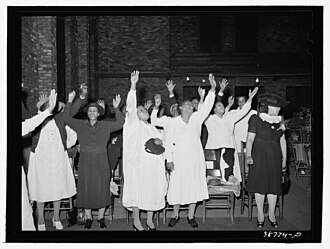
Walk into an Assemblies of God church, a Church of God in Christ congregation, or a thriving independent Pentecostal fellowship on any Sunday morning, and you will likely find people who identify without hesitation as Protestant Christians. They reject Rome. They affirm the Bible. They preach salvation through faith in Jesus Christ. What more, they might ask, does Protestantism require?
Quite a lot, as it turns out.
The Protestant Reformation was not merely a revolt against the papacy, indulgences, and the accumulated traditions of medieval Catholicism. It was a recovery — a recovery of the Gospel itself, of the biblical teaching that God justifies the ungodly freely, for Christ’s sake, through faith. Martin Luther did not set out to found a new church. He set out to call the existing church back to what the Scriptures had always taught. The theological commitments that emerged from that effort were not innovations. They were, as the Lutheran confessors insisted, nothing other than the ancient catholic faith, now articulated with renewed clarity against centuries of error.
Those commitments found their definitive expression in the documents gathered in the Book of Concord of 1580 — the Augsburg Confession, Luther’s two Catechisms, the Apology of the Augsburg Confession, the Smalcald Articles, and the Formula of Concord. Together, these documents define what Lutheranism confesses, and what historic Protestantism, in its most careful and systematic form, actually teaches.
Measure Pentecostalism against those documents, and a striking picture emerges: a movement whose real lineage traces not to Luther and Melanchthon but to John Wesley, the American Holiness movement, and a small Bible school in Topeka, Kansas, at the turn of the twentieth century. Pentecostalism did not grow from the soil of the Reformation. It grew from a very different soil entirely, and its theology reflects that origin at every structural level.
This is not a charge of heresy, nor a denial that Pentecostals may be genuine Christians. The confessors themselves acknowledged that the Holy Spirit works where and when He pleases. But the question before us is not whether individual Pentecostals are saved. The question is whether Pentecostalism, as a theological system, stands within the boundaries that confessional Lutheranism — and historic Protestantism more broadly — has always drawn. On careful examination, it does not.
What the Confessions Actually Teach
The Augsburg Confession, presented to Emperor Charles V in 1530, was not written as a polemical broadside. Melanchthon wrote it as a measured, irenic statement of what the Lutheran churches believed, taught, and confessed — grounded in Scripture and the catholic tradition of the church. Its opening articles move with deliberate care: the doctrine of God, original sin, and then, at Article IV, the heart of the matter.
“It is also taught among us,” Article IV reads, “that we cannot obtain forgiveness of sin and righteousness before God by our own merits, works, or satisfactions, but that we receive forgiveness of sin and become righteous before God by grace, for Christ’s sake, through faith.” The Latin is even more compressed: gratis, freely — entirely without contribution from the sinner’s side. This is not one doctrine among many. Luther called it the article on which the church stands or falls. Melanchthon, in the Apology to the Augsburg Confession, devoted more pages to defending this article than to any other, because he understood that once justification is corrupted, everything else follows.
The Formula of Concord, written in 1577 to settle controversies that had arisen within Lutheranism after Luther’s death, is equally precise. It distinguishes carefully between justification — the forensic declaration of righteousness before God — and sanctification, the ongoing renewal of the believer’s life by the Holy Spirit. These are real and important distinctions. The justified sinner is also being sanctified. The Spirit is genuinely at work in the Christian life. But these two things must never be confused or conflated. Justification is complete, instantaneous, and entirely God’s act. Sanctification is progressive, imperfect, and the fruit — never the ground — of the justified life.
The confessions are equally clear on the authority of Scripture. The Smalcald Articles, written by Luther himself in 1536 as a statement of the points on which no compromise with Rome was possible, treat Scripture as the sole norm and judge of all doctrine. No council, no pope, no vision, no prophetic utterance stands above it or alongside it as a co-equal source of divine truth. The Solid Declaration of the Formula of Concord opens by stating that “the prophetic and apostolic writings of the Old and New Testaments” are “the pure and clear fountain of Israel,” the “only judge, rule, and norm according to which all teachers and teachings are to be evaluated and judged.” Everything else — including the Book of Concord itself — is normed by Scripture and submitted to its authority. The confessions do not claim to add to Scripture. They claim only to confess what Scripture teaches.
These are not incidental features of Lutheran theology. They are its skeleton. A theological movement that departs from them at the structural level is not offering a variation on the Reformation tradition. It is standing outside it — however sincerely, however enthusiastically, and however many of its members might identify with the Protestant name.
Pentecostalism departs from them. And to understand why, one must first understand where Pentecostalism actually came from.
Where Pentecostalism Actually Came From
Luther nailed his Ninety-Five Theses to the door of the Castle Church in Wittenberg in 1517. Melanchthon presented the Augsburg Confession to the Emperor in 1530. Calvin published the first edition of the Institutes in 1536. These are the headwaters of the Protestant tradition.
Pentecostalism’s headwaters are somewhere else entirely.
The movement’s immediate intellectual parent is John Wesley, the eighteenth-century Anglican priest who founded Methodism. Wesley was in many respects an admirable figure — tireless in his preaching, serious about Scripture, deeply concerned with the moral renewal of English society. But Wesley was not a Lutheran, and on the doctrines that matter most to confessional theology, he was not a Reformer in any recognizable sense. He understood the distinction between justification and sanctification. He acknowledged that justification is by faith. But he drove a wedge between the two that Luther never drove, and then built his entire practical theology on the gap he had created.
For Wesley, sanctification was not simply the fruit of justification, flowering naturally from the soil of a new life in Christ. It was a separate project, a separate pursuit, culminating in what he called “entire sanctification” or “Christian perfection” — a second crisis experience, subsequent to conversion, in which the remaining power of indwelling sin was purged and the believer was brought into a state of perfect love. Wesley himself called it “the second blessing,” and he was explicit that every Christian should seek it. He counseled his followers to “go on to perfection” and to insist “upon both justification and full sanctification as receivable now by simple faith.” (BiblicalTraining)
Luther would have recognized the problem immediately. The Formula of Concord is careful to distinguish justification from sanctification precisely because confusing them, or introducing a second tier of spiritual attainment as necessary to the fullness of Christian life, inevitably corrupts the first article. Once you tell a justified believer that there is something more to be received, something higher to be reached, a blessing that the ordinary Christian has not yet attained, you have introduced a principle entirely foreign to the Reformation. You have created a spiritual ladder — exactly the kind of ladder the confessors dismantled when they demolished the medieval system of monastic perfection. The names have changed. The structure has not.
Wesley himself was not shy about his distance from Luther on this point. He wrote plainly that Luther had written more ably than anyone on justification by faith alone, and asked, “Who was more ignorant of the doctrine of sanctification, or more confused in his conception of it?” The charge was unfair, but it was revealing. Wesley understood that he was departing from the Lutheran framework, and he was comfortable doing so. (NewStartDiscipleship)
This Wesleyan structure — conversion, followed by a second definitive spiritual experience that elevates the believer to a higher plane — passed directly into the American Holiness movement of the nineteenth century. The Holiness movement emerged in the 1830s in the United States, emphasizing the belief in sanctification and the possibility of living a holy life after a profound religious experience commonly referred to as the “second blessing.” Camp meetings, revivalist preaching, and a relentless focus on experiential spirituality characterized the movement. It was fervent, sincere, and increasingly distant from anything the Lutheran confessors would have recognized as Protestant theology. (EBSCO)
Out of that Holiness soil came Charles Parham, a Methodist-ordained preacher who opened a Bible school in Topeka, Kansas, in 1900. Parham sent his students to study the New Testament book of Acts with a particular question in mind: what is the biblical evidence that a person has received the baptism of the Holy Spirit? On January 1, 1901, a student named Agnes Ozman spoke in tongues when Parham laid hands on her and prayed for her to receive the Spirit. Soon Parham and half of the thirty-four students also spoke in tongues, and they concluded that the gift of tongues was the initial evidence of Spirit baptism. (Revival Library)
The doctrine was born not from careful exegesis of the whole counsel of Scripture, not from engagement with the ecumenical councils or the patristic tradition, not from the kind of rigorous theological labor that produced the Augsburg Confession or the Formula of Concord — but from a single inductive experiment conducted by untrained Bible students in a Kansas farmhouse.
Parham’s influence reached its peak when William J. Seymour, an African American preacher who had studied under him, went on to lead the Azusa Street Revival in Los Angeles in 1906. The revival ran for three years, drawing visitors from around the world, and it became the seedbed from which virtually every major Pentecostal denomination eventually grew. As sociologist David Martin put it, “As Aldersgate Street, London was to Methodism, so Azusa Street, Los Angeles was to Pentecostalism.” (This is TopekaMissouri State University)
That comparison is more damning than Martin may have intended. Aldersgate — the moment in 1738 when Wesley felt his heart “strangely warmed” — was itself a departure from the Reformation’s understanding of the Christian life. Azusa Street doubled down on that departure and made it the foundation of a new movement. The lineage is perfectly coherent: Wesley to the Holiness movement to Parham to Seymour to global Pentecostalism. At no point in that chain does the line run through Wittenberg.
The early leaders of Pentecostalism were, for the most part, men with no knowledge or interest in the intricacies of church history. That is not a moral failing — many of them were devout and courageous Christians. But it does mean that Pentecostalism’s theological shape was not formed by engagement with the confessional tradition. It was formed by revivalist experience, Holiness perfectionism, and the conviction that the Book of Acts described a pattern of spiritual experience that every believer in every age was obligated to replicate. The Reformation asked: what does Scripture teach about how God saves sinners? Pentecostalism asked: what experiences did the first Christians have, and how do we get them? (THEOTIVITY)
Those are not the same question. The difference between them is not incidental. It goes all the way down.
The Second Blessing and the Article on Which the Church Stands or Falls
Luther was not given to understatement, but when he called justification by faith the article on which the church stands or falls, he was being precise rather than dramatic. He meant that every other doctrine in Christian theology either rests on that foundation or eventually collapses without it. Corrupt justification and you corrupt everything downstream — the nature of faith, the work of the Holy Spirit, the shape of the Christian life, the meaning of the sacraments. The article is load-bearing in the most literal theological sense.
With that in mind, consider what Pentecostalism’s doctrine of Spirit baptism actually claims.
The teaching is straightforward enough in its outline. Every Christian, Pentecostals affirm, receives the Holy Spirit at conversion. The Spirit regenerates, brings the new birth, and begins the Christian life. So far, the Lutheran confessor nods along. But Pentecostal theology then introduces a two-stage experience of the Holy Spirit. Pentecostal adherents first experience regeneration by the Spirit, then they experience baptism in the Spirit — a second, distinct, mighty act of God, subsequent to regeneration, that empowers the believer for service and equips them with spiritual gifts. Some Pentecostal groups add a third stage, placing entire sanctification between regeneration and Spirit baptism. The precise number of stages varies by denomination, but the structural logic is the same in every case: conversion gets you in the door, but there is another room beyond it, and not everyone has entered. (The Gospel Coalition)
The evidence that one has received this second blessing — the sign, the confirmation, the initial physical proof — is speaking in tongues. Parham taught from the beginning that speaking in tongues was the sign of receiving the baptism in the Holy Spirit, and that conviction became the doctrinal cornerstone of classical Pentecostalism. Tongues are not merely one gift among many. They are the necessary evidence. Without them, there is no confirmation that Spirit baptism has occurred. (Oral Roberts University)
The Lutheran confessor does not need to reach far to identify the problem. The Apology of the Augsburg Confession, in its extended defense of Article IV, makes the point with characteristic precision. Justification is forensic — a declaration, not a process. God pronounces the sinner righteous for Christ’s sake, through faith, and that verdict is complete. It is not a down payment on a fuller experience to come. It is not the first floor of a building under construction. The sinner justified by faith has received everything that God’s grace in Christ offers. Not a portion of it. Not the introductory level. All of it.
The Solid Declaration of the Formula of Concord is equally clear on the Holy Spirit’s work. The Spirit is given in and through the means of grace — the Word proclaimed and the sacraments administered. This is not a peripheral point in Lutheran theology; it is one of the things that most sharply distinguishes the Lutheran confessors from the enthusiasts, whom Luther addressed throughout his career with particular urgency. The enthusiasts — the Schwärmer, as Luther called them — divorced the Spirit’s work from the external means of grace and located it instead in immediate inward experience. The Spirit, they claimed, blows where He wills, independent of Word and sacrament, communicating directly to the soul without the mediation of the church’s preaching and administration. Luther’s response was not gentle. He insisted that God has bound Himself to work through external means precisely because fallen human beings cannot trust their own inner experiences to reliably communicate divine truth. The Word is the instrument. The sacraments are the instruments. The Spirit works through them, not around them.
Pentecostalism’s doctrine of Spirit baptism is, in this precise sense, a recurrence of enthusiasm. The second blessing is not received through Word and sacrament. It is not delivered through the preached Gospel or through Holy Baptism or through the Lord’s Supper. It is sought through prayer, tarrying, the laying on of hands, and a particular kind of emotionally charged worship environment. The experience arrives — if it arrives — through inward crisis, not through the external promise of God attached to His ordained means. And its confirmation is a physical, audible manifestation that has no necessary connection to the proclaimed Word of the Gospel at all.
Luther addressed this pattern directly in the Smalcald Articles, writing of those who “boast that they have the Spirit without and before the Word” and therefore judge Scripture and the preached Word by their own experience rather than submitting their experience to the Word’s judgment. The structure he was criticizing in the sixteenth century is identical to what Pentecostalism institutionalized in the twentieth.
There is a further problem, and it goes directly to the load-bearing article. If Spirit baptism is a second definitive blessing, distinct from regeneration and unavailable to the ordinary justified believer, then the justified believer who has not spoken in tongues is in some meaningful sense incomplete. He has been forgiven. He has been regenerated. He stands before God as righteous, for Christ’s sake, through faith. But he has not yet arrived. There is more. The Pentecostal who has spoken in tongues has experienced something that the merely justified Lutheran has not, and that experience marks a genuine spiritual distinction between them.
This is precisely the kind of two-class Christianity that the Reformation dismantled. Not in its Catholic form this time — not monks and laypeople, not those in holy orders and those merely married — but in a new revivalist form, with tongue-speakers and non-tongue-speakers occupying the same structural positions that the medieval church had assigned to the religious and the secular. The spiritual elite are now defined not by their vows or their ordination but by their experiential history. The ladder remains. Only the rungs have been renamed.
The Augsburg Confession’s great pastoral achievement was to level that ladder entirely. Every baptized believer stands on the same ground before God. The farmer and the theologian, the new convert and the lifelong saint, the one who weeps with feeling and the one who receives the Word quietly and without visible emotion — all of them are justified by grace, through faith, for Christ’s sake, completely and without remainder. The Formula of Concord’s careful distinction between justification and sanctification exists precisely to protect this equality. Sanctification is real and important, but it is the fruit of justification, not a second tier of grace that some believers attain and others do not. To introduce a post-conversion experience as necessary to the fullness of the Christian life — to tell the justified believer that there is a higher room he has not yet entered — is to undermine the very ground on which he stands.
Theologian Frederick Dale Bruner put the exegetical problem with admirable directness: Pentecostalism builds its doctrine of a necessary second entry of the Holy Spirit on texts that teach his one entry. That is not a minor hermeneutical quibble. It is a description of a theological system that has read its experience back into Scripture rather than deriving its doctrine from Scripture’s plain teaching. The Lutheran confessors had a word for that method. They called it enthusiasm. And they understood, with Luther, that enthusiasm — however sincere, however fervent, however accompanied by what appear to be genuine spiritual manifestations — cannot serve as the foundation of Christian doctrine. Only the Word, external and certain, attached to the promises of God, can do that. (The Standard Bearer Magazine)
The second blessing is, in confessional Lutheran terms, not a blessing at all. It is a burden — the reimposition of a spiritual ladder onto people whom God’s grace in Christ has already brought, fully and freely, into His presence.
The Closed Canon and the Opened Mouth: Continuing Revelation Against the Confession
There is a question that confessional Lutherans do not find particularly difficult, though much of contemporary Christianity treats it as deeply contested. The question is this: does God continue to deliver new, binding, authoritative revelation to His church today, through prophets, visions, tongues, and direct personal communication — revelation that stands alongside Scripture as a source of divine truth for Christian life and doctrine?
The Lutheran answer, grounded in the confessions and in the plain teaching of Scripture itself, is no. Not because God is incapable of speaking. Not because the Spirit has become inactive or indifferent to the church. But because God has already spoken, completely and sufficiently, in the prophetic and apostolic writings He caused to be produced and preserved for exactly this purpose. The canon is closed not because men decided to close it but because the revelation it contains is finished. Christ has come. The apostolic witness to His person, work, death, and resurrection has been delivered and written down. Nothing remains to be added.
The Solid Declaration of the Formula of Concord states this with the precision characteristic of Lutheran confessional writing. The prophetic and apostolic Scriptures of the Old and New Testaments are “the only judge, rule, and norm according to which all teachers and teachings are to be evaluated and judged.” Not a primary source among several. Not the senior partner in a collaborative arrangement with ongoing revelation. The only norm. Everything else — including the Lutheran confessions themselves — derives its authority from Scripture and is submitted to its judgment. The confessions do not claim to supplement Scripture. They claim only to confess what Scripture already teaches.
The Westminster Confession of 1646, though a Reformed rather than Lutheran document, articulates the same principle with a sentence that cuts directly to the present question. The whole counsel of God necessary for salvation, faith, and life is either expressly set down in Scripture or may be deduced from it by good and necessary consequence — and to this whole counsel, the Confession declares, “nothing at any time is to be added, whether by new revelations of the Spirit, or traditions of men.” That phrase — new revelations of the Spirit — was written with a specific phenomenon in mind, and it names the Pentecostal-charismatic claim exactly.
Pentecostalism’s doctrine of continuing revelation is not an accidental feature of the movement, something that crept in at the margins while the serious theological work was happening elsewhere. It flows necessarily from the logic of Spirit baptism itself. If the Holy Spirit continues to fall upon believers in new, direct, experiential ways that go beyond what regeneration provides, then it is entirely consistent to expect that the Spirit who falls might also speak — delivering prophecy, imparting words of knowledge, communicating divine instruction through tongues and their interpretation. The charismatic gifts and the doctrine of continuing revelation are part of the same theological package. Accept the second blessing and you have already accepted the structural principle that generates the rest.
For Pentecostals, God speaks to people today in personal and ongoing ways that have little to do with biblical revelation — life decisions made not by consulting the written Word but by personal prophecy, dreams, visions, and prophetic utterances by others. This is not a fringe phenomenon occurring only in the most excitable Pentecostal congregations. It is the normal operating procedure of the movement at large, present in its most respectable denominations as well as its most exuberant. The Assemblies of God pastor who tells his congregation that God spoke to him in prayer about the direction of the church, the Pentecostal believer who makes a major life decision on the basis of a prophetic word delivered by another member, the charismatic conference speaker who declares that the Spirit has given him a word of knowledge about someone in the room — all of them are operating within the same theological framework, one in which Scripture and direct Spirit-communication function as parallel and complementary sources of divine guidance. (Founders Ministries)
In Pentecostal quarters, the formal principle is Scripture and direct revelation from the Holy Spirit. Note what that construction does. It does not simply add a supplementary devotional practice alongside Scripture. It installs a second formal principle — a second source of authoritative divine communication — that operates alongside the written Word and, in practical terms, frequently overrides it. When a prophetic utterance contradicts what Scripture plainly teaches, the Pentecostal framework has no reliable mechanism for adjudicating the conflict, because both the Scripture and the prophecy are treated as proceeding from the same Spirit. The prophecy cannot simply be dismissed. It must be weighed. And in the experientially charged atmosphere of Pentecostal worship, the weighing almost always favors the immediate and the felt over the written and the tested. (Iron Ink)
Luther encountered this problem in his own lifetime, in its sixteenth-century form, and his response shaped the confessional tradition permanently. The radical reformers — Müntzer, Karlstadt, the Zwickau prophets — claimed direct Spirit-communication that authorized them to go beyond Scripture, to act on inner revelation, to treat their own spiritual experience as a norm by which the written Word itself could be evaluated and if necessary corrected. Luther’s response in the Against the Heavenly Prophets and elsewhere was not to deny that the Spirit is active or that God can work miracles. His response was to insist that the Spirit never leads anyone to trust in anything other than the external Word. The Spirit’s work is always to drive sinners to Christ as He is proclaimed in the Gospel, not to generate new spiritual content that supplements or supersedes what Scripture already contains.
The enthusiasts of Luther’s day and the Pentecostals of our own operate on the same structural assumption: that a genuine experience of the Spirit is self-authenticating, that the feeling of divine immediacy is itself a form of evidence, and that the believer who has had such an experience is in possession of something that the mere student of Scripture does not have. Luther’s answer was that no experience is self-authenticating. Every claim to Spirit-communication must be tested by the external Word, and anything that cannot pass that test — however vivid, however moving, however seemingly supernatural in its origin — must be set aside. The Word judges experience. Experience does not judge the Word.
Pentecostals routinely treat experience as trumping Scripture as the highest authority. That is not an unfair characterization made by hostile critics. It is an observation that honest Pentecostal theologians have made from within their own tradition, recognizing that the movement’s instinct toward experiential validation frequently overwhelms its formal commitment to biblical authority. When criticism of a Pentecostal revival is declared demonic, as happened during the Lakeland Revival of 2008, the principle of sola Scriptura has not merely been weakened. It has been inverted. The experience has become the norm by which the Scripture’s warnings are judged, rather than the Scripture being the norm by which the experience is tested. (O Key of David)
The confessional Lutheran is not a cessationist in the crude sense — the confessions do not contain a formal doctrine of cessationism, and Lutheran theology has generally been cautious about pronouncing definitively on what the Spirit may or may not do in extraordinary circumstances. But the confessions are entirely clear that no gift, no experience, and no claim to Spirit-communication can function as a co-equal source of authority with the written Word. The Spirit does not contradict Himself. He has spoken in Scripture. He does not now speak alongside Scripture, supplementing it with fresh revelation for those who have attained the requisite spiritual experience to receive it. That is not the ministry of the Spirit as the confessions describe it. That is enthusiasm, dressed in the language of Acts 2.
And it leads, with a logic that is in retrospect almost inevitable, to the theological disorder that has come to define much of Pentecostalism’s public face — a disorder we must now examine directly.
Downstream Water: The Prosperity Gospel as Theological Consequence
It would be convenient for Pentecostalism’s defenders if the prosperity gospel could be cleanly separated from the movement that produced it — cordoned off as an aberration, a corruption introduced from outside by bad actors who hijacked an otherwise sound tradition. That argument is made frequently, and there is a measure of truth in it. Not every Pentecostal church preaches health and wealth. Many Pentecostal believers find the prosperity gospel as repugnant as any confessional Lutheran does. Classical Pentecostalism in its earliest form was, if anything, suspicious of material prosperity, tending toward the ascetic rather than the acquisitive.
But the prosperity gospel did not arrive from outside Pentecostalism. It grew from within it, and it grew there because the soil was prepared for it. The theological structure that produced Spirit baptism as a second definitive blessing, that installed experiential immediacy as a co-equal authority alongside Scripture, and that trained believers to expect dramatic supernatural interventions as the normal currency of Spirit-filled Christian life — that structure did not accidentally generate the prosperity gospel. It generated it with a kind of doctrinal logic that, once traced, is difficult to deny.
The genealogy is straightforward enough to follow. The Word of Faith movement traces its roots to the New Thought movement of the nineteenth century, particularly through figures such as Phineas Quimby, who promoted the idea that positive thinking and mental attitudes can shape reality. New Thought was not Christianity. It was a metaphysical philosophy that treated the mind — and later, in its Christian adaptations, faith — as a spiritual force capable of producing material effects in the physical world. Imported into the Pentecostal framework, it produced a theology in which faith is not the empty hand that receives God’s gift of righteousness, as the Lutheran confessors understood it, but a power, a spiritual law, a force that the believer wields to claim what God has promised. (Monergism)
By the 1940s and 1950s, a recognizable form of the doctrine began to take shape within the Pentecostal movement through the teachings of deliverance and healing evangelists, who taught the laws of faith and the laws of divine reciprocity. Oral Roberts began teaching what he called a “blessing pact” in 1947, promising donors that God would return their gifts sevenfold from unexpected sources. Kenneth Hagin, drawing on the earlier work of E.W. Kenyon, systematized the theology into what became the Word of Faith movement — a fully developed doctrinal system in which faith functions as a mechanism for securing divine blessing, poverty and illness are evidence of insufficient faith, and the confession of God’s promises in the believer’s own spoken words carries creative spiritual power. (Wikipedia)
The Lutheran confessor recognizes the problem at every level, and it is worth being precise about where exactly the breaks occur, because there are several.
The first and most fundamental is the doctrine of faith itself. The Augsburg Confession’s Article IV defines faith as the instrument by which the sinner receives the righteousness of Christ — passive, receptive, directed entirely toward an object outside itself. Faith is not a power. It is not a force. It has no inherent capacity to produce effects in the world. Its value lies entirely in its object, which is the promise of God in Christ. A weak faith that clings to a sure promise is more securely held than a strong faith directed toward a false one. Luther made this point repeatedly, because he understood that the alternative — treating faith as a spiritual capacity whose effectiveness depends on its intensity or correctness — inevitably turns the Christian life into a form of works-righteousness with spiritual rather than moral currency.
The Word of Faith movement makes exactly this substitution. Faith becomes something the believer exercises rather than something the believer has. It becomes a tool rather than a posture. And the inevitable consequence is that when the promised healing does not come, when the financial breakthrough fails to materialize, when the confession of blessing produces no visible result, the fault is located in the believer’s faith. It was not strong enough. It was not pure enough. It was not correctly formulated or confidently enough spoken. The burden that the Reformation lifted from the sinner’s shoulders — the burden of having to produce the right quality of response to secure God’s grace — is quietly reloaded, in a new vocabulary, onto the backs of people who were told they had been set free.
The Apology of the Augsburg Confession spends considerable effort distinguishing between the God who gives freely and the God of medieval Catholic theology who gives conditionally, in proportion to the merit the sinner has accumulated. The prosperity gospel does not resurrect the medieval system in its Catholic form. But it resurrects its logic. God’s material blessings are available to the believer who has the right kind of faith, who gives generously enough, who confesses correctly enough. The transaction has been rebranded in Pentecostal language, but it remains a transaction — and the Reformation’s entire point was that God does not transact. He gives. Freely. Without condition. For Christ’s sake alone.
The second break is with the theology of the cross, which Luther regarded as the defining mark of genuine Christian theology. In the Heidelberg Disputation of 1518 — one of the most concentrated expressions of Luther’s mature thought — he drew a sharp distinction between the theologian of glory and the theologian of the cross. The theologian of glory reads God’s favor off visible success, health, power, and prosperity. He assumes that blessing looks like what the world calls blessing, and that God’s goodness is demonstrated in the removal of suffering and the conferral of material abundance. The theologian of the cross understands that God characteristically hides Himself under the opposite of what the world calls glorious — in weakness, suffering, poverty, and the scandal of a crucified Savior. The cross is not an unfortunate detour on the way to resurrection glory. It is the permanent shape of Christian existence in this age.
The prosperity gospel is, in Luther’s precise sense, a theology of glory. It promises what the theologian of glory always promises — that faithfulness will be rewarded with visible, tangible, this-worldly flourishing. It portrays God as a benevolent provider who rewards faith with tangible benefits, often framing poverty or illness as results of insufficient faith or unconfessed sin. The suffering believer is not pointed to the crucified Christ who meets him in his affliction. He is pointed to his own faith, his own confession, his own giving record, and told that the problem is somewhere in his spiritual performance. The cross, in this framework, has been preached away. What remains is a prosperity narrative that has more in common with the ancient health-and-wealth religions of the pagan world than with anything in the Lutheran confessions — or, for that matter, with anything in the New Testament. (The Father’s Heart)
The third break is with the doctrine of vocation. Lutheran theology has always insisted that God’s blessings come to His people through ordinary means — through the farmer who grows the grain, the baker who bakes the bread, the physician who treats the sick, the magistrate who maintains order. God feeds His people, but He does so through the neighbor, through the structures of creation, through what Luther called the masks of God. This is not a diminishment of divine providence. It is a description of how providence actually operates in a fallen world that God has not yet brought to its final renewal. The Christian works faithfully in his vocation, trusts God for his daily bread, and does not demand that God circumvent the ordinary structures of creation to demonstrate His favor in miraculous and financially measurable ways.
The prosperity gospel evacuates this entire framework. Vocation disappears, replaced by a spiritualized financial mechanism in which giving to the right ministry triggers divine multiplication. It was largely within American Pentecostalism that New Thought concepts were adapted to Christian theology and evolved into prosperity gospel teachings, and the adaptation worked precisely because Pentecostalism had already trained its adherents to expect that Spirit-filled Christianity would look dramatically different from ordinary life — more miraculous, more immediate, more visibly supernatural. The prosperity gospel simply extended that expectation into the financial realm. If the Spirit can produce tongues, healings, and prophecies as direct divine interventions in the believer’s experience, why not also direct divine interventions in the believer’s bank account? (Encyclopedia Britannica)
The answer confessional Lutheranism gives is not that God cannot provide miraculously. The answer is that God has not promised to do so as the normal pattern of Christian life in this age, and that building a theology on the expectation that He will is a form of tempting God — demanding that He validate our faith by performing on cue in ways that satisfy our definition of blessing. Luther knew this temptation. He had watched the enthusiasts of his own day chase after signs and wonders, and he had seen what it did to them when the signs did not come. It produced either self-deception — manufacturing the experience to fill the gap left by the absent miracle — or despair, as the believer concluded that his faith must be defective since God had not delivered what was promised.
Both outcomes are visible in contemporary Pentecostalism. The manufactured experience appears in the staged healing services, the coached testimonies, the pressure to confess improvement whether or not improvement has actually occurred. The despair appears in the quiet exodus of people who gave and prayed and confessed and believed and watched their loved ones die of cancer anyway, and who left concluding that something must be wrong with them since God had apparently not shown up for them the way He shows up for the people on the stage.
The Lutheran pastor has a different word for those people. He tells them that God was present in their suffering, hidden under its opposite as He always is in this age, and that the crucified Christ who cried out from the cross asking why God had forsaken Him is the same Christ who meets them in their abandonment and carries it with them to the other side. That is the theology of the cross. It is not comfortable. It does not fill auditoriums or generate television networks. But it is what the confessions teach, because it is what Scripture plainly says — and it is precisely what the prosperity gospel, with its relentless theology of visible glory, cannot bring itself to offer.
TO BE CONTINUED NEXT WEEK IN THE ANSWERING OBJECTIONS SECTION