
Response to R.C. Sproul, Jr. on Tragedy and Who is the Author of Evil.
Notes from BCBM Ep. 82

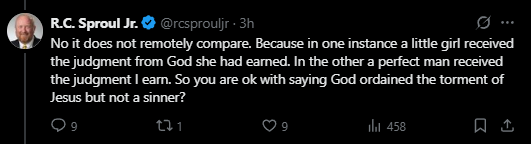
1) God’s providence is real—but Scripture and our Confessions still call evil “evil,” and teach Christians to lament it.
Lutherans gladly confess God’s sovereign rule. Yet we do not deny the reality of creaturely tragedy or flatten it with speculative theodicy. The Lutheran way is the theology of the cross: we call things what they are—evil, suffering, death—and take them to Christ. (For Luther’s “theology of the cross,” see the Heidelberg Disputation intro.)
Scripture gives us words of lament, not slogans that erase grief:
- “How long, O Jehovah? wilt thou forget me for ever?” (ASV, Ps 13:1).
- “Why standest thou afar off, O Jehovah? Why hidest thou thyself in times of trouble?” (ASV, Ps 10:1).
- “Jesus wept.” (ASV, Jn 11:35).
Our Catechisms teach Christians to pray for deliverance precisely because evil is real:
- Large Catechism, Seventh Petition: “Deliver…from the Evil One… the entire substance of all our prayer is directed against our chief enemy.”
- Small Catechism, Seventh Petition: God would “rescue us from every evil of body and soul… and finally… give us a blessed end.”
Calling evil “not a tragedy” at the creaturely level contradicts how Scripture teaches us to speak, pray, and pastor.
2) “God is not the author of sin.” Therefore, we must not ascribe moral causality for specific horrors to God’s will.
The Lutheran Confessions are emphatic:
- “God is not a creator, author, or cause of sin.” (Formula of Concord, SD I).
- “Original sin does not come from God… it is a work of the devil.” (FC SD I).
- Apology XIX: The cause of sin is “the will in the devil and men turning itself away from God.”
Likewise, Scripture:
- “Let no man say… I am tempted of God… he himself tempteth no man.” (ASV, Jas 1:13).
- “...his work is perfect… a God of faithfulness and without iniquity.” (ASV, Deut 32:4).
So when a Christian commentator implies that a particular victim “received the judgment… earned,” he risks confusing God’s hidden permission with His revealed will, and risks charging God with authorship of evil. FC SD XI warns us not to chase God’s “secret, concealed” counsel, but to cling to what He has revealed in Christ.
3) Jesus explicitly forbids reading specific disasters as proof that their victims were “worse sinners.”
Our Lord addresses exactly this misuse:
- “Those eighteen, upon whom the tower in Siloam fell… think ye that they were offenders above all…? I tell you, Nay.” (ASV, Lk 13:4–5).
The proper takeaway from calamity is a general call to repentance, not an inference about the victim’s comparative guilt. Confessional Lutheran preaching follows Jesus here: Law that calls all to repentance; Gospel that comforts the afflicted.
4) God really does bend even tragedies toward the good of His people—yet we say this as promise, not as denial of tragedy.
St. Paul teaches:
- “All things work together for good… to them that love God.” (ASV, Rom 8:28).
- Joseph confesses: “Ye meant evil… but God meant it for good.” (ASV, Gen 50:20).
Confessional Lutheran theology holds the both/and:
- Creaturely level: tragic, evil, lamented (hence the Psalms, the Petitions, Jesus weeping).
- Eschatological level: God finally wipes every tear. (ASV, Rev 21:4).
Even Romans 8 places us in the “groaning” present:
- “The whole creation groaneth and travaileth in pain.” (ASV, Rom 8:22).
Thus we do not solve the problem of evil by retitling horrors as “non-tragedies.” We endure them in faith, prayer, and hope until Christ returns.
5) The cross of Christ is unique; do not use it to minimize other people’s suffering.
Yes, the closest thing to a “cosmic tragedy” is the crucifixion of the sinless One—and yet even that is our redemption. But using the cross to say other victims “got what they deserved” misapplies Law and obscures Gospel. The Confessions direct us to give the troubled conscience Christ:
- “We must believe that we have eternal life… from pure grace, by faith in Christ.” (Apology IV).
Pastorally, Scripture commands real comfort:
- “Sorrow not, even as the rest, who have no hope.” (ASV, 1 Th 4:13).
6) Election and providence are preached for comfort, not to harden hearts or excuse indifference.
FC SD XI insists election be taught so “that… we might have hope,” not despair or stoic detachment. We are forbidden to speculate beyond revelation; we cling to Christ, the “Book of Life,” and preach repentance and the free Gospel to all.
7) Where a Reformed voice says “ultimately there are no tragedies,” the Lutheran reply is:
- Now: call evil “evil,” pray “deliver us from the Evil One,” and comfort sufferers with Christ crucified and risen.
- Not yet: confess that God can and does overrule even horrors for His people’s good, without making Him the author of the horror.
- At the Last: boldly hope for the day when tragedy itself is ended: “death shall be no more… nor pain, any more.” (ASV, Rev 21:4).