"Signal (Interlude)" Explained: The Dead Hear and Live
A Static Whisper from the Fathers on the Word That Wakes the Dead

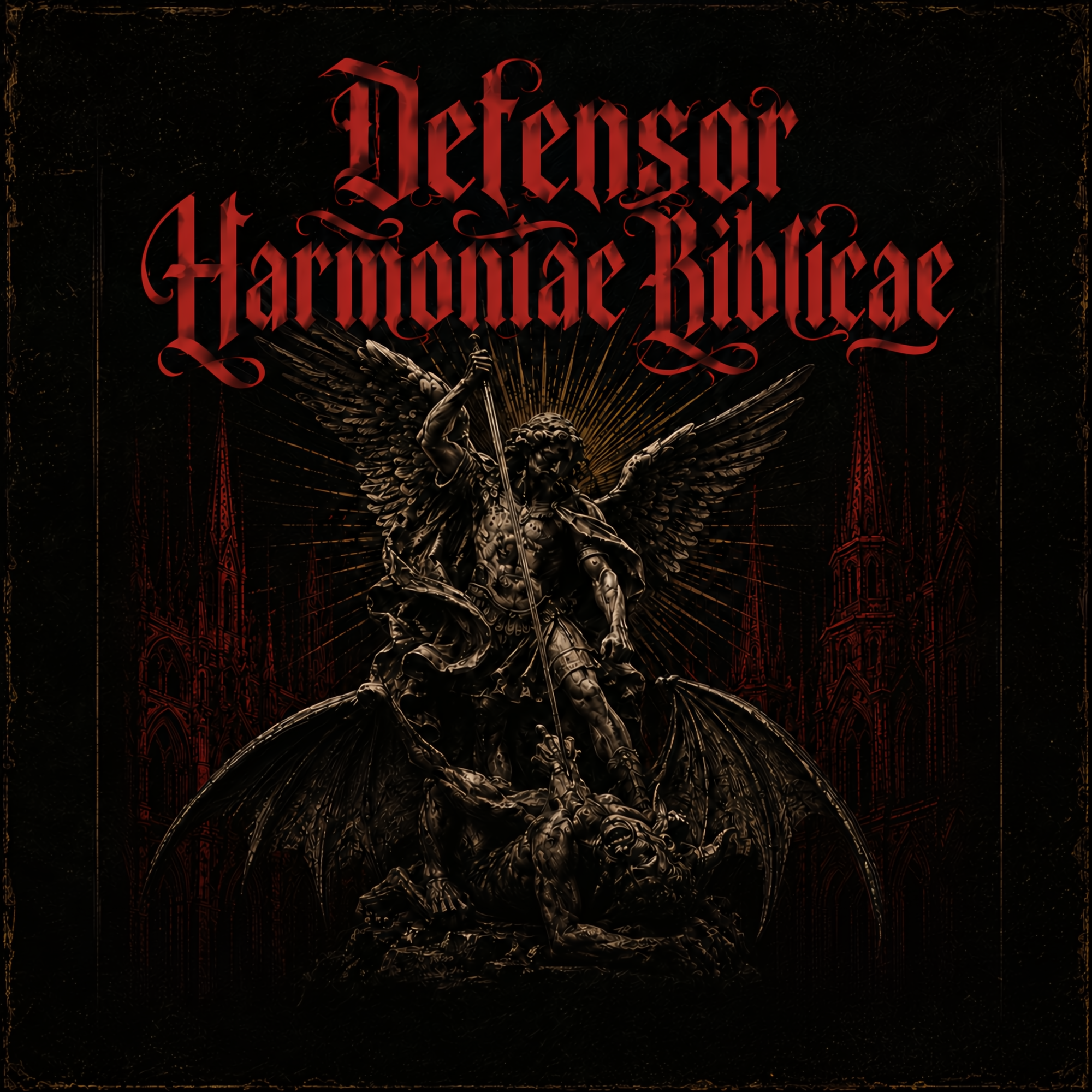
In the coming weeks, I intend to examine the theological foundations of selected songs from the new DHB album, Defensor Harmoniae Biblicae. Although not every lyric warrants detailed analysis, many were influenced by Scripture, sermons, doctrinal debates, and theological works I have studied extensively.
I’ll start with an interlude.
Typically, interludes function as transitions between significant sections. In my album, they serve to divide the musical narrative and transport the listener to a different context. The voice and mood shift, creating the impression of a transmission.
Although “Signal” contains complete lyrics and resembles a sermon, it remains an interlude because it interrupts the album’s flow and places the listener in a contemplative state, suggesting the emergence of a deeper reality.
A Weak Signal Outside a Forsaken Town
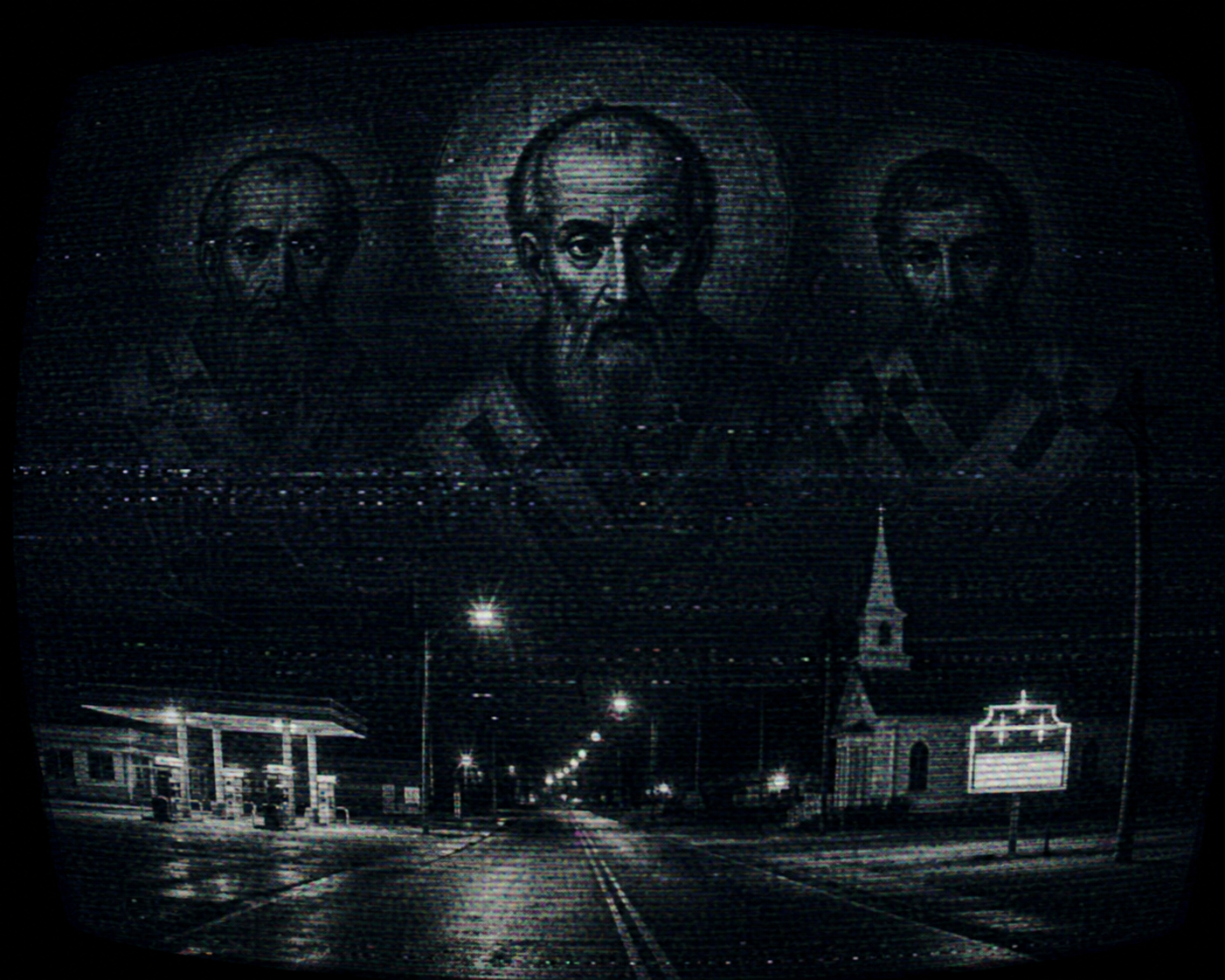
The concept originated during a late-night drive through a small Texas town, around two in the morning, when familiar locations appear unfamiliar. Gas stations emit light in isolation, closed restaurants seem deserted, church signs remain unlit, houses are obscured by fields, and it is possible to traverse the town without encountering another vehicle.
The AM radio becomes unpredictable, producing static, distant country music, unfamiliar weather reports, agricultural equipment advertisements, and fleeting voices originating from distant states.
Subsequently, preachers begin to broadcast: their impassioned voices elongate words, emphasize points with forceful gestures, and modulate their tone to such an extent that it appears as though a spiritual presence is being invoked.
Intensity is not inherently negative; Chrysostom, for example, was known for his passionate delivery. However, intensity does not guarantee effectiveness. Volume is not synonymous with the presence of the Holy Spirit, and physical exertion does not equate to genuine inspiration.
In “Signal,” one might anticipate chaos, yet instead a whisper emerges. It evokes the sense that the Church Fathers are communicating beneath the static, transcending centuries, collapsed empires, extinct languages, deserted highways, and outdated audio equipment.
The voice announces what God does:
The Lord speaketh.
The Spirit worketh.
The dead hear.
And they live.
The lyrics are derived from multiple homilies by Chrysostom, rather than a single translated sermon or isolated quotation. I synthesized his teachings on creation, Abraham, Lazarus, Ezekiel’s vision of the bones, preaching, bodily resurrection, and Christ’s triumph over death into the motif of a fading AM signal.
“The Lord Doth Not Spend Empty Words”
signal acquired
The Lord doth not spend empty words
When He speaketh it is done
When He commandeth it standeth fast
He calleth things that are not as though they were
Dust heareth
Darkness obeyeth
Death itself receiveth instruction
Our words are often empty: broken promises, powerless descriptions, noise filling silence. God’s Word is different:
“For he spake, and it was done;
He commanded, and it stood fast.”
—Psalm 33:9, ASV
When God speaks, creation comes into existence. Light does not deliberate, the sea does not convene, and dust does not determine whether it should become Adam.
“He calleth things that are not as though they were” comes from Romans 4:17. Chrysostom says it is “much easier to give a subsistence to things that are not” than for us to name existing things. We name because something exists. God calls, and it exists.
Dust cannot hear, darkness does not possess consciousness, and death does not accept commands. However, the limitations inherent in creation do not constrain the Creator. Although death is formidable, it is not equivalent to God. It is an intruder that Christ has already defeated and awaits its ultimate end.
The Lord does not engage in negotiation with the grave; rather, He issues commands to it.
“The Word of God Is Not Information”
The Word of God is not information
It is operation
It accomplisheth that for which it is sent
The grave knoweth this
The valley knoweth this
Hell knoweth this
Scripture instructs and reveals, yet the Word also acts: it sustains creation, grants forgiveness through Christ’s proclamation, effects baptism through water and the Word, and imparts Christ’s promised body and blood. As Isaiah 55:11 affirms, it accomplishes the purpose for which God sends it.
The grave knows through Lazarus, dead four days when Jesus spoke. Chrysostom says Christ could “by His word move a corpse” and likewise move the stone; it was removed so witnesses saw the grave, decay, and a truly dead man.
Christ’s voice gave Lazarus ears. “Lazarus, come out.” The command gives what it demands.
The valley knows through Ezekiel:
“O ye dry bones, hear the word of Jehovah.”
—Ezekiel 37:4, ASV
Bones require life, not encouragement or enhanced worship experiences. They are incapable of independent action. When Ezekiel speaks, bone joins to bone, flesh forms, breath enters, and the dead rise. Chrysostom notes that God’s command added “flesh, and nerves and skin to them.” The Word accomplishes the transformation.
Hell knows because Christ went into the grave, rose in His body, and, as Chrysostom says, “disarmed death and vanquished it.” Hell knows His voice. It has heard the doors being torn off their hinges.
“The Spirit Wandereth Not Apart From the Word”
The Spirit wandereth not apart from the Word
He delighteth to ride upon the promise
Through mortal voices He performeth immortal works
Through common speech He accomplisheth uncommon things
He softeneth stone
He strengtheneth trembling hearts
He createth faith where none existed
The dead hear
And they live
The Spirit does not operate independently from Christ, nor does He await a particular emotional atmosphere. He remains inseparably connected to the Word He inspired and generates faith through Christ’s promise. Neither music, emotions, nor excitement summon Him. Paul, as Chrysostom observes, preached “in demonstration of the Spirit and of power.”
A preacher’s voice, education, personality, and skill are all human attributes. A sermon may be delivered through a cathedral sound system, an inexpensive microphone, an old radio, or simply by the unaided human voice. The speaker possesses limitations, but the promise originates from God.
Peter had not finished preaching to Cornelius before, Chrysostom notes, “immediately comes the Spirit upon them.” No dramatic climax, music, or lowered lights were needed. The Word was spoken, and He acted.
Skill is valuable; Chrysostom, for instance, was known as Golden-Mouthed. However, eloquence cannot generate faith, volume cannot transform hearts, and charisma cannot absolve a troubled conscience. The dead hear because Christ’s voice imparts life.
“Behold the Preacher”
Behold the preacher
He standeth before graves
No sword in hand
No earthly power
No strength of his own
Only a promise
Only a proclamation
Only the foolishness of preaching
Yet heaven itself attendeth that voice
For God hath chosen the spoken Word
to overthrow death
The preacher may stand before a coffin, a grieving family, an open grave, and the awaiting earth. He possesses neither weapons, technology, medicine, nor personal strength—only a promise.
Chrysostom compares him to a herald whose task is “adding nothing, but declaring the things which we have heard.” His authority is not originality or private power, but Christ’s authorized message.
This message may appear foolish: proclaiming to the dying that a crucified Jew has conquered death, even in the presence of the coffin. The world perceives a contradiction, whereas faith recognizes a promise. As Chrysostom states, God chose “through the foolishness of preaching to save them which believe,” employing fishermen and ordinary individuals. The preacher proclaims the One who overcame death.
Preachers may substitute Christ with falsehoods, political agendas, self-help rhetoric, entertainment, or personal charisma. Nevertheless, heaven does not regard Christ’s proclaimed Word as insignificant earthly noise.
The preacher’s voice may tremble, yet the promise remains unwavering.
“The World Laugheth”
The world laugheth
The devil rageth
The flesh doubteth
Still the preacher speaketh
Still Christ reigneth
Still the Spirit worketh
The efficacy of the Word is not determined by emotional excitement. Ezekiel preached to dry bones, and Jesus addressed Lazarus after four days in the tomb. The apostles lacked wealth, security, status, or prestige, yet, as Chrysostom notes, “in their chains and persecution, overcame their persecutors.”
Mockery doesn’t make the Word untrue. The devil’s anger doesn’t make it weaker. A preacher’s weakness doesn’t weaken Christ, and his doubt can’t change the promise he’s been given.
The radio voice conveys victory, not due to urgency or agitation, but because Christ reigns regardless of whether the voice whispers or proclaims loudly.
The signal may appear weak, yet the kingdom remains strong.
“What Is It to Summon Dust Again?”
To Him who fashioned Adam from the dust
what is it to summon dust again?
He who numbered every hair forgetteth none of His workmanship
He calleth
He gathereth
He restoreth
Bone unto bone
Flesh unto flesh
Life unto life
Nothing is lost
Nothing forgotten
Nothing beyond His reach
If God created Adam from dust, resurrection should not be considered difficult. Although humans cannot recover every scattered element or reverse decay, the One who raises the body is the same One who formed it.
Against pagan objections, Chrysostom calls the raised body “the same substance improved.” Resurrection restores rather than replaces God’s workmanship.
These very bones, this flesh, this body.
It will be changed, glorified, and incorruptible, but still the body God made. “Each receives back his own and none that of another,” Chrysostom says, and “the body indeed remains.” Sea, fire, time, and decay can’t hide it. God remembers each of His people.
He calls. He gathers. He restores.
“These Very Hands”
These very hands
These very eyes
These weary bodies laid down in weakness
Shall rise again
Corruption shall yield unto incorruption
Mortality shall put on immortality
The sleeper awaketh
The exile returneth home
The tear is answered
The grave surrendereth its prey
Christ hath conquered
And His victory shall not remain His alone
Bodily resurrection means Christ’s victory is shared with His people. Bodies that have faced sickness, disability, exhaustion, age, injury, and death will rise and never decay again.
Chrysostom says believers appear “with the same one made incorruptible.” Not an imitation or replacement. These very hands. These very eyes.
Christ’s wounds remained visible. The tomb was empty because His crucified body rose, and His people will rise bodily.
Paul refers to the dead as sleepers because, as Chrysostom states, “death is a sleep.” Nevertheless, death remains an adversary. It separates body and soul, resulting in empty chairs, unanswered calls, unused clothing, and silent rooms. Christians maintain that this condition is not permanent.
The sleeper wakes up. The exile comes home. Tears are answered. The grave lets go of its prey. Christ is the firstfruits, and the harvest comes after. The Head rises first, then the body.
“Though Thy Hope Seem Buried”
Therefore take heart
Though thy hope seem buried
Though thy bones feel dry
Though thy prayers return through silence
The Lord hath spoken
And what He promiseth He performeth
The Spirit still worketh
The Word still soundeth
The dead still hear
And they live
The song progresses from themes of creation, to preaching, to resurrection, and ultimately to consolation. Hope may appear buried, bones may seem dry, and prayers may feel unanswered, yet God continues to speak.
Abraham saw his age and Sarah’s barrenness, yet trusted the One who raises the dead and calls things into being.
Christian hope does not disregard reality: the bones are dry, Lazarus was deceased, and the grave contains a body. However, nothing surpasses the power of God’s Word.
Optimism anticipates improvement, whereas faith perceives God’s promise even when circumstances appear insurmountable.
The AM signal does not instruct the listener to seek latent spiritual strength within. Instead, it directs attention beyond the self. The Spirit remains active, the Word continues to be proclaimed, and the dead continue to listen.
And they live.
The Signal Remains
The song ends where it began:
The Lord speaketh
The Spirit worketh
The dead hear
And they live
Now the song carries creation, Abraham, Ezekiel’s valley, Lazarus, the preaching of the apostles, the preacher’s weakness, Christ’s resurrection, the graves of the saints, and the final trumpet.
The signal was heard when light broke into darkness, outside Lazarus’s tomb, and through the voices of the apostles. It’s heard from pulpits, baptismal fonts, altars, hospital rooms, and gravesides.
At times, the message is obscured by static, resembling a faint signal in the early morning hours as the town lies dormant. It lacks the volume, refinement, or intensity sought by those who conflate excitement with the presence of the Holy Spirit.
It is a whisper from the Church Fathers, traversing a dark Texas highway.
The signal may seem weak, yet its Word remains powerful.
One day, the Word will be heard without any static. The trumpet will sound, and every grave will receive its final call.
The Lord will speak.
The dead will hear.
And they will live.
New Album releases on the Festival of St. Olaf, July 29th. Pre-save it here.