
The Collapse of Evangelical Pop Culture
Why Christians Must Replace Shallow Pop Culture with Art Rooted in Truth, Beauty, and Theology.

A Moment of Sobriety
The tragic loss of Charlie Kirk has caused many in the church to pause and reexamine the seriousness of our faith in an age of chaos and uncertainty. The world feels increasingly unstable—political strife, cultural decay, and the collapse of meaning seem to be the air we breathe. In this moment, more and more are rolling the dice to take Christianity seriously, realizing that the shallow idols of modernity cannot save.
Yet in the face of this growing seriousness, Christian pop culture has too often remained wed to the world. Instead of feeding believers with what is lasting, it has too often catered to the sugary distractions of sentimentality and marketable clichés.
Our Lord reminds us:
“Lay not up for yourselves treasures upon the earth, where moth and rust consume, and where thieves break through and steal: but lay up for yourselves treasures in heaven, where neither moth nor rust doth consume, and where thieves do not break through nor steal: for where thy treasure is, there will thy heart be also.” (Matthew 6:19–21, ASV)
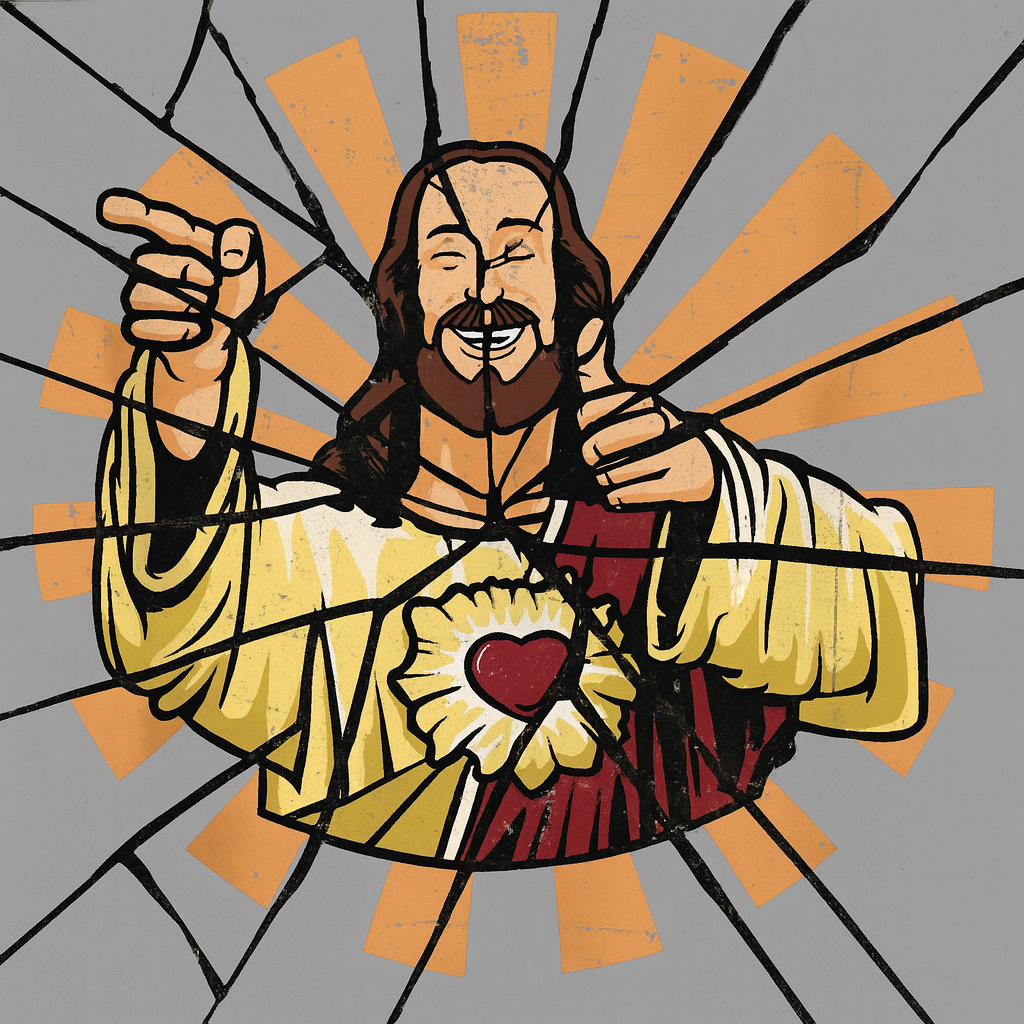
If our art and culture are treasures, then where is the treasure of Evangelical pop culture today?
What We Have Lost
Gone are the days when T. S. Eliot wrote with sweeping biblical cadence, when Cecil B. DeMille brought biblical epics to the screen with grandeur, when J. R. R. Tolkien and C. S. Lewis gave us works of myth and imagination steeped in truth. These were not perfect men, but their art bore weight and left a legacy.
The Augsburg Confession reminds us that such cultural offerings can serve as adornments to faith:
“Our churches are falsely accused of abolishing the Mass; for the Mass is retained among us, and celebrated with the highest reverence. Nearly all the usual ceremonies are also preserved…” (Augsburg Confession, Article XXIV, 1–2, Triglot)
Here the confessors defended not the bare minimum of faith, but the rich beauty that surrounded it. If this was true of the liturgy, how much more should it be true of the art, stories, and culture that shape our imaginations?
Instead, too often what passes for Christian media today has abandoned beauty for marketing, depth for slogans.
The Evangelical Industrial Complex
The rise of Evangelical cinema and music over the last two decades produced an industry, but not a culture. Films like God’s Not Dead and the Sherwood Pictures catalog gave believers representation on the screen, but at what cost?
These productions were not written with the goal of great art, nor were they rich with theological depth. They existed as tracts dressed up in cinematic clothing, designed more for proselytizing than for enduring cultural contribution.
Our Lutheran Confessions speak against such superficiality when they condemn works done merely for show, rather than from true faith:
“Our churches teach that such traditions introduced as a means of propitiating God, and to merit grace, are contrary to the Gospel and the doctrine of faith. Wherefore vows and traditions concerning meats and days, etc., instituted to merit grace and to make satisfaction for sins, are useless and contrary to the Gospel.” (Augsburg Confession, Article XXVI, Triglot)
The Christian imagination must not be shackled to propaganda or hollow moralizing. It must breathe the freedom of the Gospel, clothed in beauty and truth.
A Higher Calling
Christians owe it to the next generation to recover a vision of mythology, imagination, and storytelling that is theologically rich and artistically excellent. The Apostle Paul exhorts:
“Finally, brethren, whatsoever things are true, whatsoever things are honorable, whatsoever things are just, whatsoever things are pure, whatsoever things are lovely, whatsoever things are of good report; if there be any virtue, and if there be any praise, think on these things.” (Philippians 4:8, ASV)
Our art should not be escapist slop or shallow entertainment, but works that are true, honorable, pure, and lovely. Not every Christian work must preach directly, but every Christian work must be soaked in the truth of Christ and the beauty of His Word.
Luther himself understood that the arts are gifts of God:
“For all the arts—music in particular—are gifts of God and not of man. They lighten the heart and drive away the devil.” (Luther, Table Talk, No. 4071)
If music can drive away the devil, so too can literature, film, and culture grounded in the cross of Christ.
My Small Part
I am no Eliot or Lewis. I am not a DeMille or a Tolkien. I am a pastor, an apologist, and a writer. My work here, on Substack and on YouTube, is to challenge, to critique, to call Christians back to something deeper and truer.
I write pulp fiction—Children of the Black Veil, Ezekiel Creed: Tribe of Dust and Blood, and more on the way—not as high art, but as a contribution to this much-needed renewal of Christian imagination. My goal is to offer stories that are entertaining, gritty, and imaginative, but also deeply infused with theology and the reality of the spiritual struggle we face daily.
Whatever small role I play, I take comfort in the apostolic word:
“And whatsoever ye do, in word or in deed, do all in the name of the Lord Jesus, giving thanks to God the Father through him.” (Colossians 3:17, ASV)
If my pulp stories, my apologetics, and my cultural critiques can encourage even a handful of Christians to reject the shallow offerings of Evangelical pop culture and instead hunger for beauty, truth, and the Word of God—then my work has not been in vain.
The collapse of Evangelical pop culture is not the end. It is an opportunity for Christians to take up the mantle of creating a culture that glorifies God and shapes the imagination of generations to come.