
The Confessional Response to Pop Culture Fear
From Swiftie Hysteria to Lutheran Resistance: A Call to Create, Not Complain.

The cult of pop has met yet another crisis of faith.
Taylor Swift, the crowned saint of the cat-ladies the world over, has apparently committed the one unforgivable sin in modern feminism: she got engaged. The shrieks echo from Facebook to TikTok—Swift’s followers wailing that their icon of “independent womanhood” has fallen to the dark side of domestic bliss. Comment sections drip with despair: “She’s lost her voice!” “She’s surrendering to patriarchy!” “Marriage is ruining her art!”
For weeks, the digital temples have burned.
Now, let me make something clear before anyone accuses me of pop heresy: I couldn’t care less about Taylor Swift or her music. I’m not a Swiftie, I don’t own a friendship bracelet, and I couldn’t name three of her songs if you offered me a lifetime supply of Lutheran coffee. But I do care about what this panic reveals. Because it’s not really about Taylor Swift—it’s about a culture terrified of God’s design.
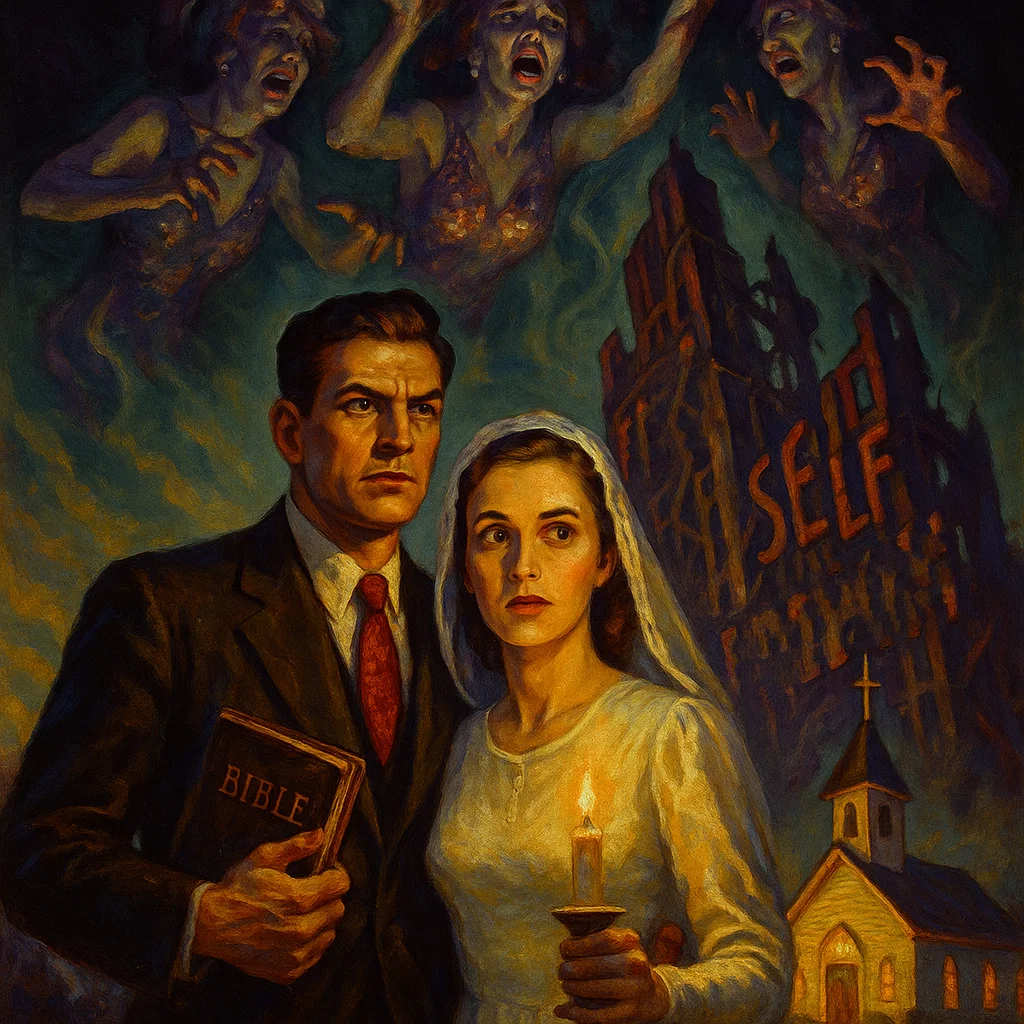
The Swifties’ hysteria is the perfect parable for our time: a generation so devoted to self-expression that it’s afraid of love, family, and faithfulness. When a celebrity dares to exchange the glitter of self-worship for the quiet glory of home, the congregation howls.
It’s a strange thing to witness a civilization afraid of joy.
The Fear of Creation Order
At the heart of the panic lies rebellion against the created order itself.
From the beginning, Scripture tells us, “God created man in his own image... male and female created He them” (Genesis 1:27). In that single sentence, the Lord defines reality. Man and woman are not interchangeable, not rivals in an endless tug-of-war for dominance—they are complements, two notes in a divine harmony.
The man is called to lead in sacrificial love (Ephesians 5:25). The woman is called to receive and to nurture, a living reflection of the Church’s faith toward Christ (Ephesians 5:22–24). Together, they form an icon of the Gospel itself—Christ the Bridegroom, and His Bride, the Church.
But to the modern ear, this sounds like slavery. Our culture has spent decades preaching that freedom means self-definition, that the highest good is autonomy. To submit to any design, even God’s, is to be shackled. So when a woman like Swift begins to look happily toward the prospect of marriage, the world panics as though she’s been taken hostage.
This is not new. The Apostle Paul saw it in Rome: “They exchanged the truth of God for a lie, and worshiped the creature rather than the Creator” (Romans 1:25). The lie never changes—it only updates its wardrobe. In the 16th century, it wore the vestments of legalism. In the 21st, it wears sequins and hashtags.
The Confessional Response
The Lutheran Reformation was not afraid of culture—it confronted it head-on with the full weight of God’s Word.
The Augsburg Confession wasn’t a polite theological essay; it was a declaration in front of an empire, a bold stand against the fear of man. In Article XVI, Of Civil Affairs, we read:
“The Gospel teaches an eternal righteousness of the heart. Meanwhile, it does not destroy the state or the family, but very much requires their preservation as ordinances of God.”
The Reformers didn’t retreat into monasteries. They affirmed that God’s design for home, marriage, and vocation are not accidents—they’re holy orders.
In the Apology to the Augsburg Confession, Melanchthon defends marriage with fire:
“Chaste marriage is a divine ordinance and command.” (Ap. XXIII.38)
And Luther, in the Large Catechism, calls marriage “the foundation of all human society.”
Contrast that with pop culture’s message: marriage is a trap, motherhood a burden, masculinity toxic, and femininity outdated. But the Church knows better. The Church knows that these are not prisons—they’re parables of the Gospel.
Christ is not diminished by loving His Bride. The Church is not enslaved by submitting to Him. They are glorified in union.
This is our answer to pop-culture fear—not scorn, not withdrawal, but joyful defiance. We live the created order openly, beautifully, and without apology.
The Domestic as Heroic
The world loves spectacle. It confuses noise for power and visibility for virtue. That’s why modern feminism treats fame as the highest form of womanhood—because it can be measured, posted, and monetized.
But Scripture teaches that greatness often hides in quiet places.
When the angel Gabriel appears to Mary, she doesn’t respond with a brand deal. She says, “Behold, the handmaid of the Lord; be it unto me according to thy word” (Luke 1:38). The universe shifts on that sentence. She becomes the most powerful woman who ever lived—precisely because she surrendered to God’s will.
The Proverbs 31 woman doesn’t overthrow her husband; she blesses him. She doesn’t despise her work; she sanctifies it. Her strength is not in rebellion, but in reverence. “Strength and dignity are her clothing, and she laughs at the time to come” (Proverbs 31:25).
Luther saw this clearly. In his sermons on marriage, he wrote:
“In this estate, the husband is the head, and the wife gladly permits herself to be governed, knowing that it pleases God.” (Luther’s Works, Vol. 45)
To the modern world, that sounds oppressive. To the Christian, it sounds like freedom.
Because when the home is ordered according to Christ, it becomes a fortress against chaos. The domestic is not dull—it’s heroic.
Pulp Fiction and the Theology of Vocation
Culture doesn’t change through debates alone. It changes through imagination—through stories that teach the heart what sermons teach the mind.
That’s why I write pulp fiction. It’s not escapism; it’s engagement. It’s confession through narrative.
In Children of the Black Veil, Jonathan Brooks wrestles with sin, corruption, and the moral decay of his city. He’s not a saint, but he learns that true strength comes from repentance and duty. His battles are physical, but his war is spiritual—the fight to remain faithful in a world that rewards compromise.
In Ezekiel Creed: Tribe of Dust and Blood, the warrior-priest Creed faces evil with both sword and Scripture. He’s not guided by self-glory but by divine calling. He embodies Luther’s theology of vocation—the idea that every calling, whether in the pulpit or in the dirt, is holy if it’s done in faith.
That’s what pop culture doesn’t understand. You don’t have to destroy the old order to find meaning. You have to redeem it.
Stories like these plant seeds in the imagination—seeds that grow into homes, communities, and churches that reflect Christ rather than mock Him. If we want to answer Hollywood’s gospel of self, we must give the world a better story.
Building a Culture Worth Keeping
So what do we do with this bizarre hysteria over Taylor Swift’s engagement?
We don’t sneer. We build.
We build homes that last longer than trends.
We build marriages that defy statistics.
We raise sons who lead and daughters who rejoice.
We write books, compose music, paint art, and craft stories that smell of eternity.
When the world fears being “domesticated,” the Church rejoices in being incarnated.
When the culture sneers at headship, we preach the Bridegroom who died for His Bride.
When they mock the home, we make it the center of civilization again.
This isn’t nostalgia—it’s resistance. It’s confession. It’s the quiet courage of living God’s order without shame.
The Apology says it perfectly:
“The Gospel does not abolish the order of nature, but requires it to be kept as a work of God.” (Ap. XXIII.38)
Let the Swifties fear marriage. Let the influencers fear obscurity. Let the culture fear being tamed.
We will fear God—and find freedom.
A Final Word
If you’re tired of watching pop culture dismantle everything sacred, stop complaining and start creating. You don’t need a record deal or a viral hashtag. You need conviction.
Write stories that honor beauty.
Paint art that whispers eternity.
Raise a family that proves love is stronger than the world’s cynicism.
That’s how we win—not by outrage, but by outlasting.
Because every home built in Christ’s name is a blow struck against the empire of the self.